Most people assume that if their dog hates the crate, the crate is the problem. So they try a bigger one, a different location, leaving the door open longer. And the dog still doesn’t want to go in.
The crate usually isn’t the issue. What’s inside it is.
A bare crate is just a box. There’s nothing to do, nothing comfortable to lie on, and no reason for a dog to feel good about being in there. It’s not that your dog is being difficult or that crate training isn’t working. It’s that the setup isn’t giving them anything to work with.
The good news is that this is one of the more fixable problems in dog ownership. The right toys, a bit of comfort, and a few small habits can turn the crate from somewhere your dog dreads into somewhere they’ll choose to go on their own. Here’s what actually makes a difference.
What to Put in the Crate
Give them something to do with their mouth
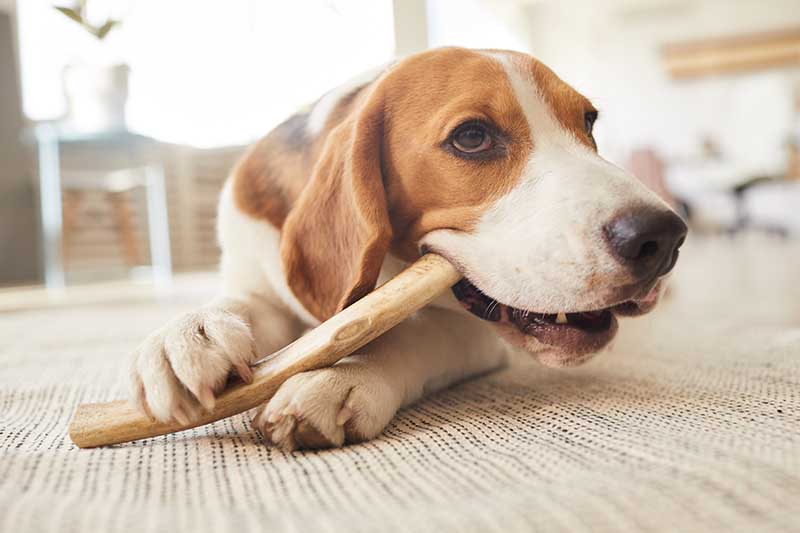
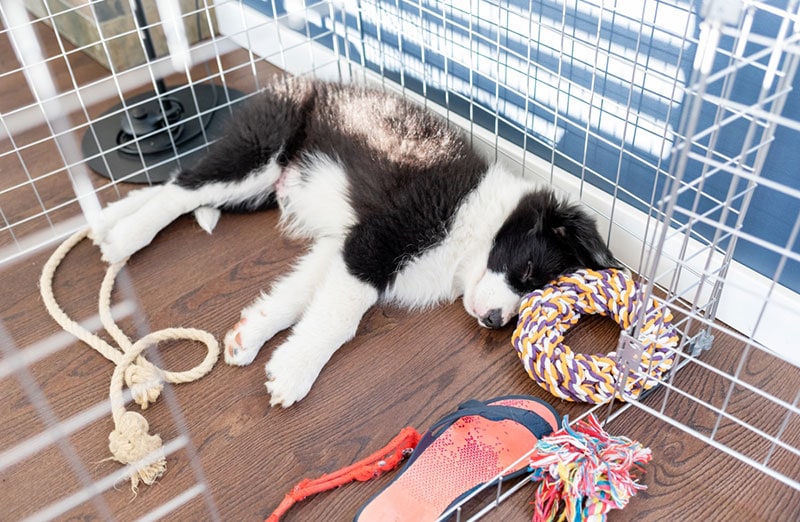
Chewing is one of the most natural, self-soothing things a dog can do. A good chew toy in the crate gives your dog an outlet, reduces boredom, and builds a positive association with being in there in the first place.
The durability of the toy matters a lot here. If your dog can break it down into pieces, those pieces become a choking or blockage risk, which is the last thing you want when you’re not watching. Skip rope toys, tennis balls, and anything plush unless you’re right there supervising. For unsupervised crate time, stick to toys specifically made for heavy chewers.
Treat-dispensing toys take this a step further. These can be packed with kibble, small treats, or peanut butter and give your dog something to work at rather than just chew through. Licky mats are another option in the same category. They tend to keep dogs occupied for longer and are low-stress, which makes them useful for dogs who get anxious when left alone. Check that any toy left unattended is genuinely tough enough to withstand your dog’s chewing style before you rely on it.
Add some mental challenge
Puzzle toys are worth knowing about if you haven’t tried them yet. They’re designed to make your dog think, usually by hiding treats inside compartments that require nudging, flipping, or sliding to access. The mental effort involved can tire a dog out more effectively than you’d expect.
Most puzzle toys are built to last, and the treat element rewards your dog for persevering. One thing to keep in mind: if your dog gets frustrated and can’t figure it out, they may start trying to chew the toy itself. Supervise with any new puzzle toy first, and don’t leave one in the crate for long stretches unattended.
Make the space comfortable
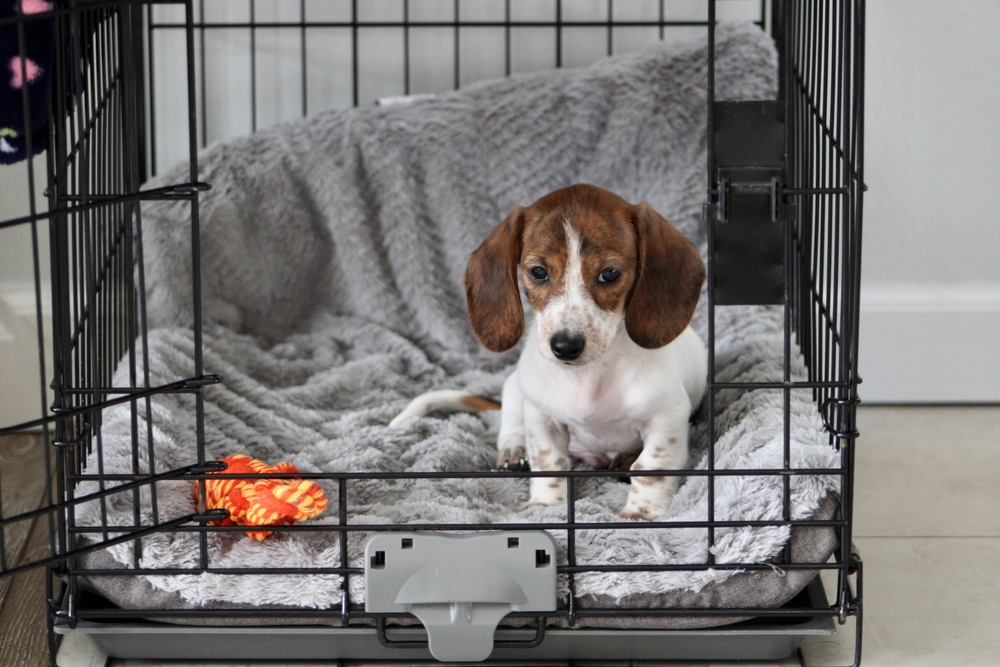
A crate with nothing in it but hard plastic is not an inviting place to spend time. A soft, well-fitted dog bed changes the atmosphere considerably. Many dogs will start choosing to go into the crate on their own once there’s comfortable bedding inside, especially if the door is left open during the day so they can wander in and out freely.
If your dog chews everything, look for beds made specifically for destructive dogs. A shredded bed is messy to clean up, but more importantly, swallowed foam or fabric can cause real problems. It’s worth spending a bit more on something that holds up.
One thing that makes all of this work better: exercise before crating. A dog who’s had a proper walk and some mental stimulation before going into the crate is far more likely to settle down and nap than one who’s been cooped up with no outlet.
Background noise helps more than most people realise
Silence in an empty house can be harder on anxious dogs than owners tend to expect. Leaving the TV on when you go out won’t entertain your dog the way a toy will, but the sound of voices and ambient noise makes the space feel less empty. Many dogs settle more easily with some background sound than in complete quiet.
Music can be even more effective. One study involving 117 dogs found that classical music had a notably calming effect compared to other genres or no music at all. Dogs spent more time sleeping and less time vocalising when classical music was playing. It’s a small, low-effort change that can genuinely make a difference.

Pet cameras are useful (but test them first)
Two-way pet cameras let you check in on your dog while you’re out and speak to them through the device. For a lot of dogs, hearing their owner’s voice is reassuring. For others, it has the opposite effect: they hear you, get excited or anxious, and then can’t understand why you’re not there.
Before you rely on a camera as part of your dog’s crate routine, test it while you’re still close by, such as from outside or in your car, so you can come back quickly if your dog gets distressed rather than calmer.
The habits that make all of this work
The tools above are more effective when the underlying training is consistent. A few things that matter regardless of what toys or setup you use:
Keep crate time within reasonable limits. The general guidance is no more than 8 hours for adult dogs, and no more than 3 hours for puppies. Crating a dog for longer than they can handle undoes the positive association you’re trying to build.
Build good feelings around the crate itself. Feed meals inside it, leave treats in there, and let your dog go in and out freely when it’s not in use. The goal is for the crate to feel like their space, somewhere they choose to go, not somewhere they get put.
Stay consistent with the training process. It’s easy to go soft when a puppy gives you the look, but crate training only works when it’s done reliably. Consistency is what turns a reluctant dog into one who trots in on their own and settles down.
Done right, a crate is one of the most useful tools you have. It keeps your dog safe, supports housetraining, helps with travel, and gives them a predictable space that’s genuinely their own. The setup just has to be worth being in.
Featured Image Credit: Jaclyn VernaceP, Shutterstock
Did You Know?
- Our brand-new posts are rounded up and included in our weekly emails. Don’t miss out on the latest – sign up for our newsletter below!
 What to Put in the Crate