Whether out of curiosity or because you live in a place where there are many coyotes, you may find it helpful and interesting to know the differences between the tracks of these canids and those of their close cousins, dogs.
Here’s how to determine if the tracks that you see are those of a coyote and not a dog, along with other general tips for telling the two species apart.
Good to Know: You don’t have to be an expert to identify coyotes or dogs by their tracks! Coyotes tend to leave behind many clues that even novice trackers can successfully decipher. However, it is usually easier to find and identify animal tracks in winter, as fresh snow provides a kind of “canvas.” That said, the following tips should also help if you find tracks in mud.

The 4 Main Ways to Tell Dog and Coyote Tracks Apart
1. Shape of Prints
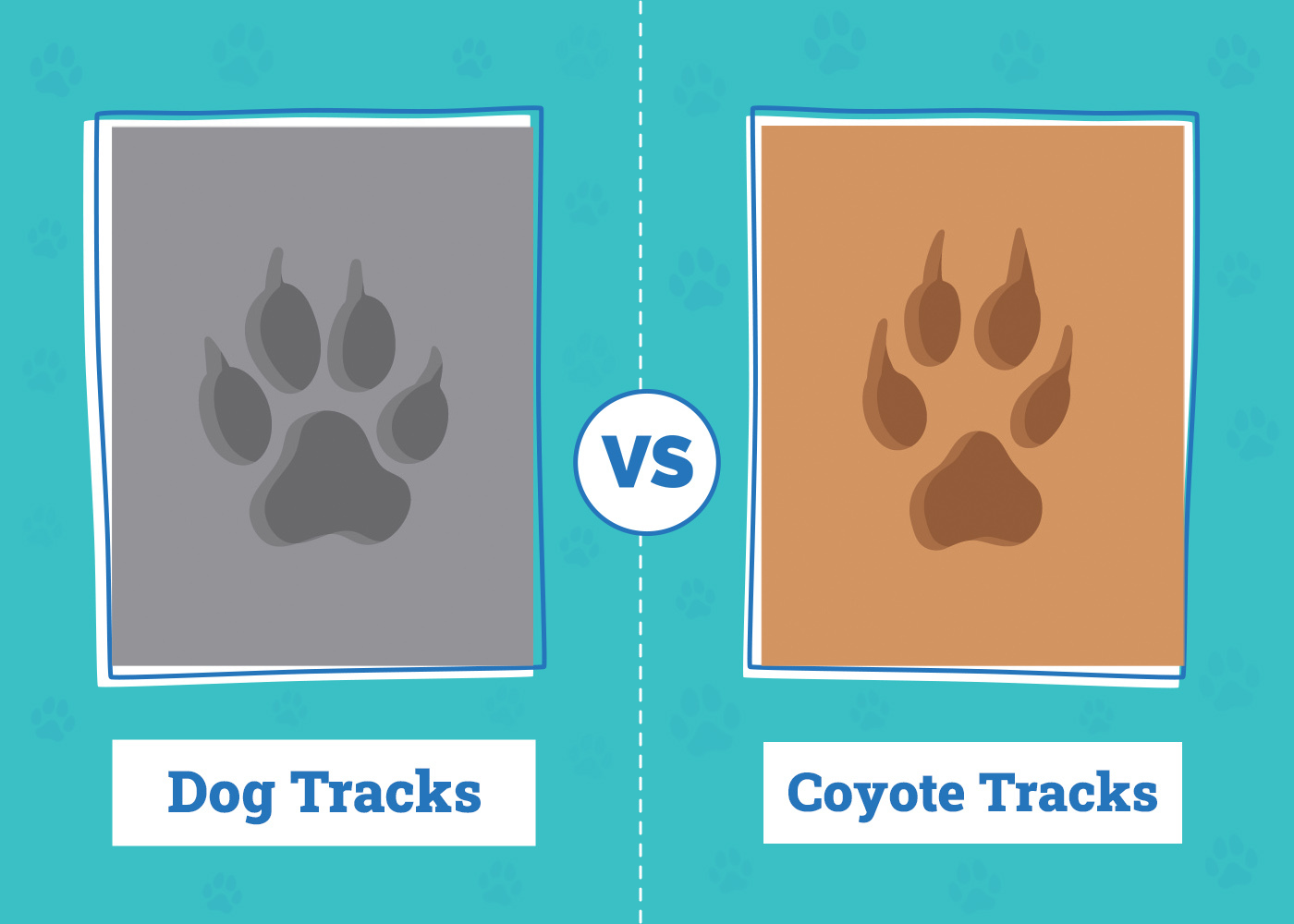
If the space between the fingers and the pads (called the interdigital space) is X-shaped—meaning you can draw an “X” through it—it is most likely a canine print. The paw prints of coyotes are oval-shaped, and their toes are all aligned and pointing forward.
Although dog prints vary by species, they generally have a roundish shape and splayed toes.
2. Size of Prints
Coyote prints are typically 2.5 to 3.5 inches long, while average-sized dog tracks are wider and extended in different directions.
3. Claws

Canines’ claws are visible in the prints that they leave because their claws are non-retractable. Dogs usually have large claws with rounded tips. In contrast, coyotes have thin, sharp claws. On a side note, you won’t find claws on most feline prints, as they are retractable.
4. Stride
Coyotes have a long stride and align their front and back legs when walking, reminiscent of the graceful gait of cats. Dogs walk more erratically, and their course does not follow any particular pattern.
In other words, coyotes tend to walk in a straight line to conserve energy, while dogs don’t care and wander wherever they please.

Additional Tips to Tell Dogs and Coyotes Apart
If you are having trouble identifying the animal because the tracks are old or damaged, look for other signs. For example, scat can be an excellent indicator of the type of wildlife roaming around. If you spot an animal in the distance that vaguely resembles a dog (or a wolf!), pay attention to the following elements.
1. Scat
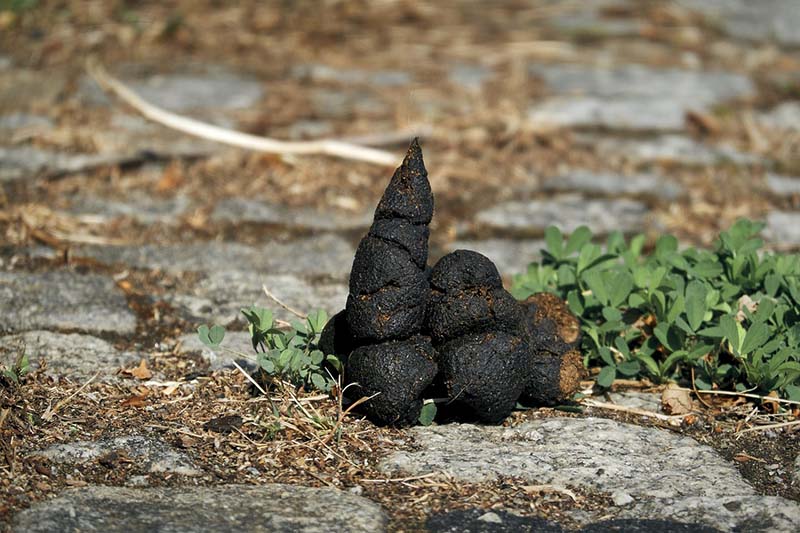
If you don’t see any coyotes around, look for scat. They are usually less than 1 inch in diameter and may taper to a point at one end. However, the size and consistency of coyote feces vary depending on their diet. They mostly contain hairs, berries, and bone fragments from their prey.
The size of dog feces can also vary depending on breed and diet, but they often lack a tapered end. Healthy dog feces will generally have a uniform appearance due to the consistency of commercial dog food.
2. Size
Coyotes are generally more slender and smaller than medium-sized dogs. A male coyote weighs between 20 and 50 pounds, while a German Shepherd can reach 90 pounds. However, coyotes are much longer than dogs; they can measure up to 37 inches from muzzle to tail. By comparison, a Siberian Husky rarely exceeds 30 inches in length.
3. Ears and Muzzles

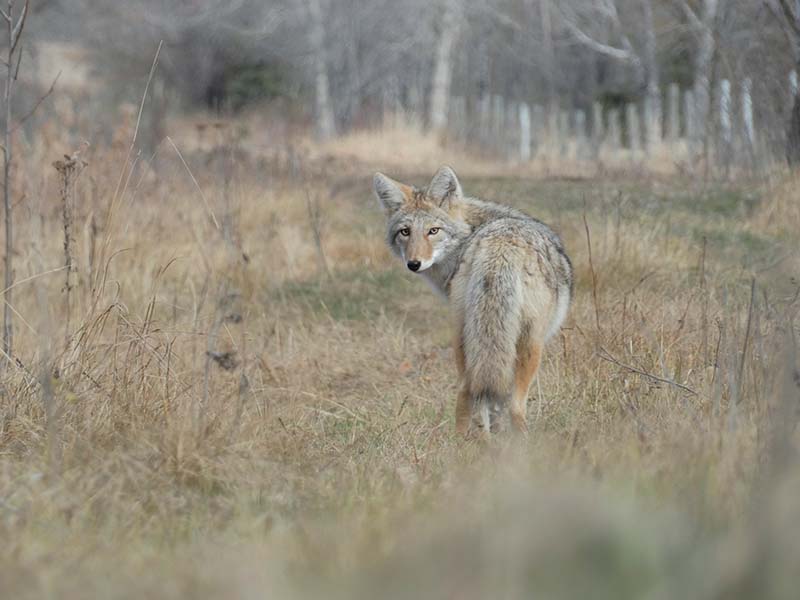
Coyotes’ ears are pointed and erect, similar to those of a German Shepherd but thinner. In contrast, the top of their muzzle and forehead form a roughly continuous line, unlike most domestic dogs.
4. Eye Color and Shape
Coyotes have slightly almond-shaped yellow eyes with black, round pupils, giving them a characteristic sly look. In contrast, dog eye colors vary widely, from sky blue to deep black and varying shades of brown.
5. Feet and Claws

The feet of coyotes are more elongated than those of similarly sized dogs. They also have four fingers and non-retractable claws.
6. Fur
The long, soft fur of coyotes is usually tawny gray, darker on the lower half of their back, and dotted with black-tipped hairs. The neck is massive and bushy, while the rest of the body seems thinner. Interestingly, the color of coyotes’ fur changes seasonally to allow for better camouflage in the surrounding environment, so it is dark in summer and pale in winter.
Dogs’ coats vary greatly depending on the breed, but it is rather rare for the color to change over the seasons.
7. Tail

Coyotes have long, tawny, and bushy tails that are darker on top. Also, the tip of their tail is almost always black. Another characteristic that helps differentiate coyotes from dogs is the position of the tail when running. Coyotes run with their tails down, while dogs normally keep their tails up.
8. Speed and Agility
Coyotes are endowed with remarkable endurance, flexibility, and speed. They run at an average speed of 25 mph and can reach peaks of 43 mph. Only the Greyhounds could catch them, but coyotes are cunning and often manage to evade their pursuers.
9. Calls and Vocalizations

Coyotes have a wide range of calls and vocalizations. They may bark like dogs, but their sounds are usually more high-pitched and piercing. Coyotes can also yelp, growl, howl, moan, and scream. They can be heard at all hours of the day and night, but dusk and dawn are normally their favorite times to give an impressive concert of howls, especially if there are several congeners in the same area!

Summary of Key Differences Between Dogs and Coyotes
| Coyote (Canis latrans) | Medium-Sized Dog Breed* (Canis lupus familiaris) |
| Tracks: Oval-shaped, toes pointed forward, thin and sharp claws marks | Tracks: Splayed toes, large claws with rounded tips |
| Face: Narrow and pointed; small nose pad | Face: Large and wedge shaped; square nose pad |
| Ears: Tall and pointed | Ears: Pointed, straight, and symmetrical |
| Eyes: Yellow and almond shaped | Eyes: Dark and almond shaped |
| Tail: Bushy with a black tip | Tail: Long and bushy |
| Shoulder Height: 21 to 24 inches | Shoulder Height: 24 to 26 inches |
| Length: Up to 37 inches (nose to tail tip) | Length: 22 to 26 inches (nose to tail tip) |
| Weight: 20–50 pounds | Weight: 65–90 pounds |
| Coat: Gray or reddish brown, grizzled | Coat: Varies, though typically black and tan |
*Side note: The German Shepherd is used here as an example because they share a few characteristics with coyotes.

What to Do if You See a Coyote

Most coyotes are afraid of people and generally not a danger to your safety, provided that you take a few precautions. However, coyotes may view dogs as a threat or potential prey, depending on the size of your pup.
Here are a few tips if you come across a coyote in the wild:
- Always keep your dog on a leash in areas with wildlife.
- Stay on open trails and paths.
- Don’t panic if you see a coyote, but do stay alert.
- If the coyote approaches you, give it enough space to escape.
- Don’t let your dog interact with the animal.
- Walk away slowly, and avoid turning your back on the coyote. Always keep eye contact with it.
- Never feed coyotes (or other wildlife, for that matter). Their lives and your safety depend on coyotes remaining naturally suspicious of humans.
In Summary
Coyotes are found all over North America in urban and rural areas. They rarely pose a danger to humans, but they can be a threat to your pet, especially if your dog is small and not that assertive. In any case, it is useful to differentiate coyotes’ tracks from those of dogs and to know the main differences between these two species of canids, whether as a precaution or simply out of curiosity.
Featured Photo Credit: Sourabh Bharti, Shutterstock