In this article
The question of when dogs are considered adults is a bit complicated. Puppies are generally younger than 1 year old, but not all dogs have reached sexual maturity or their full size by that time. So, the age at which dogs reach adulthood varies; the definition of adult means to have completed growth and development. Small and medium breeds typically mature faster and live longer than larger ones. Small-breed puppies usually hit adulthood between 6 and 8 months, while medium-size dogs often need a full year to develop. Large dogs are generally fully grown when they’re between 12 and 18 months old, but some enormous dogs need up to 2 years to mature fully.

How Long Do Most Dogs Live?

The average canine lifespan ranges from 10 to 13 years, but longevity depends on the size and breed. Small breed dogs generally live 10 to 15 years. Chihuahuas, for example, have long lifespans and can live 16 years or more. Larger dogs typically mature more slowly and have much shorter lives than smaller ones. Great Danes, for instance, often only make it to around 8 years old or so. However, a dog’s diet and lifestyle can also affect their longevity.
Why Do Small Dogs Live Longer Than Large Ones?
No one is really sure why small dogs live longer since larger animals usually live much longer than smaller ones. African Savannah elephants, for instance, often survive in the wild for 60 to 70 years, while pet mice often only live for 3 years or less.
When explaining why small dogs live longer lives than large dogs, some evidence suggests that large pets may develop serious conditions at younger ages than smaller ones. And there are often differences in the types of diseases and illnesses that large and small dogs typically suffer from.
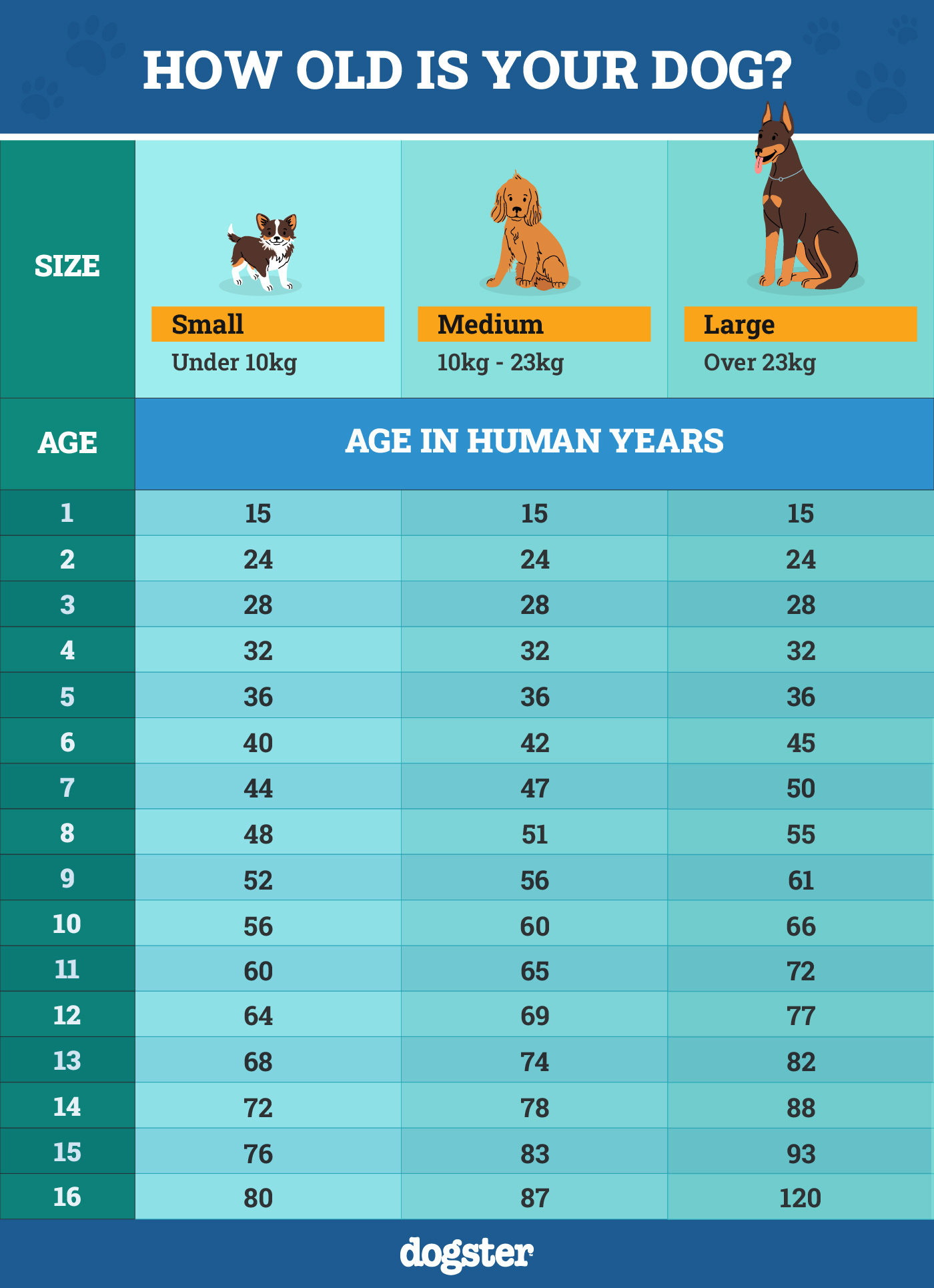
How Can You Tell a Dog’s Age in Human Years?
There are a few standard methods for determining a dog’s age, all of which have drawbacks! The most frequently used formula is simply 1 dog year for every 7 human years. So a 5-year-old dog would be about 35 human years old. It’s a rough estimate, partly because the formula fails to account for the fact that dogs often develop more quickly during their first few years than after adulthood.
The formula can be tweaked by using age-adjusted ratios, such as 10.5 human years for the first 2 years of a dog’s life and 4 human years for every year after that. Using the second formula, a 10-year-old dog would be about 53 in human years. But ultimately, both methods fall short because they fail to factor in important considerations such as weight and breed.
When Do Dogs Typically Calm Down?
Dogs develop emotionally and physically at different rates. Pets can be adults, able to reproduce, and still exhibit enthusiastic, puppy-like behavior. But most begin to settle down when they’re between 12 and 18 months old.

Do Dogs Need to Be Grown to Start Training?
No. In fact, it’s usually best to get started with training and socialization as quickly as possible after puppies come home. Most puppies are mature enough to start working on basic commands such as sit, stay, and down when they’re 8 weeks old or so. Keeping training positive is critical, as dogs are particularly prone to developing life-long fears and phobias due to negative experiences during this crucial early life stage.
Puppies also benefit from gentle socialization during this formative period; it’s the best time for dogs to learn to behave appropriately around different people and in various situations. Dogs generally soak up what they learn as puppies, often making it easy for them to master basic obedience commands with patience and repetition. While dogs are still relatively small, training helps ensure they’ll be well-behaved once they’re full-grown, which can be particularly important with extremely enthusiastic or large pets.
If you need guidance on training your puppy, we suggest you speak to a vet.
If you need to speak with a vet but can't get to one, head over to PangoVet. It's our online service where you can talk to a vet online and get the advice you need for your pet — all at an affordable price!

When Are Dogs Considered Seniors?
Dogs hit their senior years at different ages. The difference in aging rates is largely based on size and breed. Smaller dogs are usually considered senior citizens when they hit 11 or 12. Medium-sized dogs reach the milestone when they’re around 10.
Large dogs become elderly around 8, and giant breed pets have usually slowed down substantially by the time they’re 7. Signs that a dog has reached their golden years include difficulty hearing, seeing, and getting around. Heart, kidney, and liver conditions are also relatively common.
Are There Ways to Tell a Dog’s Age if You’re Not Sure?
There are a few ways to estimate a dog’s age, none of which are 100% accurate. Puppies generally have a complete set of adult teeth by the time they’re 24 weeks old. Senior dogs often have missing and broken teeth, and some teeth are covered with tartar. It’s sometimes possible to get a general idea of a dog’s age based on their coat condition and mobility. Healthy adult dogs have more energy and clean, shiny coats. Older pets often have cloudy eyes, dull coats, and mobility issues, and some sport a bit of gray around their snouts.

Final Thoughts
Puppyhood generally lasts around 1 year, but dogs mature and reach adulthood at different rates depending on factors such as size and breed. Small dogs hit adulthood sooner and have longer lifespans than larger pets. Tiny dogs are often considered fully grown when they’re around 6 or 8 months old, and many live for 10 to 15 years. Large dogs generally don’t hit full size until they’re between 1 and 1 1⁄2 years old, but most only live for 10 to 12 years. Some giant dogs can take up to 2 years to grow up.
- Related read: 10-Year-Old Dog: Vet-Approved Care Tips
Featured Image Credit: Roman Zaiets, Shutterstock