Caring for a dog with separation anxiety can be difficult. To prevent it from ever taking root, many dog owners try to train their dogs to accept temporary isolation. However, that doesn’t always work. There is little hard evidence to pinpoint the direct reasons a dog may develop separation anxiety. However, due to observed patterns in dogs with separation anxiety, especially dogs adopted from shelters, it is believed that a major loss or change in a dog’s life can lead to separation anxiety.
In this article, we’ll discuss the signs of separation anxiety and four possible reasons it may develop.

The 4 Causes of Separation Anxiety in Dogs
1. Change in Ownership
One of the primary reasons that a dog may develop separation anxiety is due to a change in ownership. This is seen most often in dogs who have been surrendered to animal shelters and are then given a new home and a new family. The experience of being abandoned by a previous family can be frightening for dogs, leading them to develop separation anxiety with their new owners. Even dogs who have never spent time in a shelter can develop separation anxiety if they are given to a new family.
2. Abrupt Schedule Change
Many people believe that dogs are spontaneous, and while that can be true, it isn’t the case in all scenarios. If you change your schedule abruptly—such as taking a new job that requires longer hours—your dog will notice and may not be happy.
The more drastic the change, the more noticeable it may be for your dog. Dogs should stick to a routine, which includes when they will be fed, when they will be let outside, and when they can expect you to return home from the day. A sudden change in this pattern can make your dog panicky and develop separation anxiety.

3. New Place of Residence
Even if your dog’s family or routine doesn’t change, they can develop separation anxiety if you move to a new home. The unfamiliarity of the location may agitate them, and if they are left alone in a strange place, they may become even more frightened. Thus, moving to a new home may trigger separation anxiety in your dog.
4. Alteration to the Family Dynamic
If your household has experienced a shift in the family dynamic, your dog may have developed separation anxiety. For instance, if a family member has moved away to college or passed away, your dog will notice their absence and may become distressed by it. If you’ve recently had a change in your household dynamic and have just now begun to see the signs of separation anxiety in your dog, that could be the reason why.

The 4 Signs of Separation Anxiety
The signs of separation anxiety are often right in front of our faces, but some people don’t even realize it. To determine whether your dog may have separation anxiety, watch out for the following signs:
- Urinating or defecating indoors: If you return home to urine or feces around your house, it could be a clear sign that your dog has separation anxiety. However, breaking house training can also be a sign of medical complications, so consult your vet to rule out any illnesses.
- Destructive behaviors: If you notice that your dog has chewed or otherwise destroyed household objects while you are away, they may have separation anxiety. You may also notice injuries, such as cracked teeth or damaged nails, due to this behavior.
- Excessive vocalization: Dogs with separation anxiety tend to bark or howl when left alone or locked out of rooms that the owners are in.
- Escaping or pacing: Your dog may attempt to escape an enclosure or pace relentlessly when you are away.
If you notice any of these behaviors, reach out to your vet. They often correlate with illnesses or injuries and separation anxiety, so it is crucial to verify that your dog is not sick or injured.
If you need to speak with a vet but can't get to one, head over to PangoVet. It's our online service where you can talk to a vet online and get the advice you need for your pet — all at an affordable price!
What to Do Before You Depart from Your Dog
If you believe that your dog has developed separation anxiety, there are some ways that you can make a departure easier for your dog to bear. A big part of your dog’s separation anxiety is picking up on cues that you are about to leave. This makes your dog agitated and distressed since they know you are about to depart.
So, before leaving your dog, provide rigorous exercise. The idea is to burn off excess energy so your dog doesn’t get as riled up about your departure. Likewise, this period of activity also gives your dog plenty of attention.
Then, 15–30 minutes before you leave, take your dog to a relaxation area and leave them there without you. Having a radio or television on will help your dog feel less alone while you stay in another area of the house. Essentially, you will pretend that your dog is not even there. It is best if they have a toy to entertain them while you’re in the other room.
Any routine to prepare for departure (grabbing keys, putting on your coat, etc.) should be performed away from your dog. If possible, other departure cues should be moved to another time, such as making yourself lunch the night before your departure. This is so your dog does not realize that you are preparing to leave, thus giving them little reason to become agitated.
Do not say goodbye. Instead, silently slip out of the house.
How to Use Treats to Help Reduce Your Dog’s Anxiety
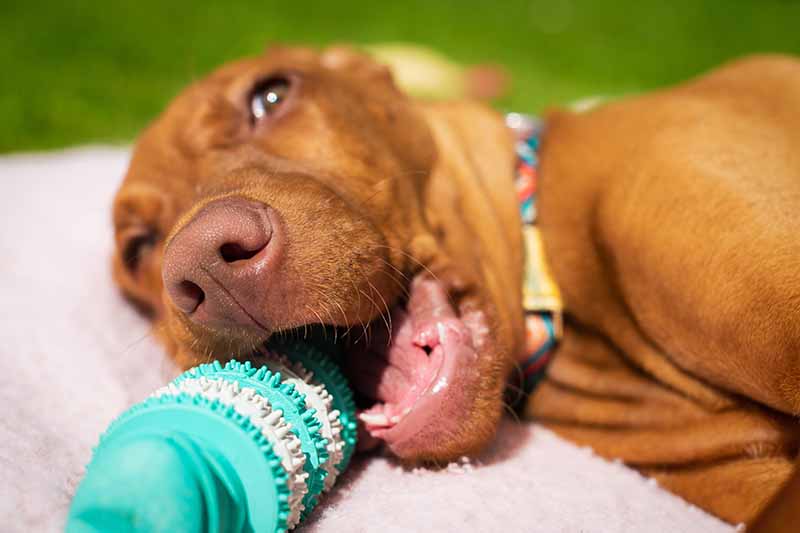
Before departing, you may find it helpful to provide your dog with a special treat or toy to keep them distracted and happy. This gives your dog something to look forward to when you are away, making the isolation much easier to bear.
What motivates your dog the most? Is it food or toys to play with? Whatever the answer is, it will give you a good clue about whether a treat or a toy would be the most effective distraction for your dog.
Final Thoughts
Canine separation anxiety can be challenging to navigate, and it can be hard to determine the condition’s root cause. Generally, separation anxiety is believed to be caused by a major life upheaval, such as a family dynamic change or a new home. However, it can be impossible to tell why a dog has developed this issue. Still, there are ways to manage your dog’s separation anxiety, such as using treats or toys. We hope this article has helped you to recognize the signs, causes, and possible solutions for separation anxiety in your dog.
See Also:
- Why Does My Dog Poop Immediately After Eating? (5 Potential Causes)
- 11 Best Canned & Wet Dog Food Options for Sensitive Stomachs
Featured Image Credit: Bogdan Sonjachnyj, Shutterstock
 The 4 Causes of Separation Anxiety in Dogs