


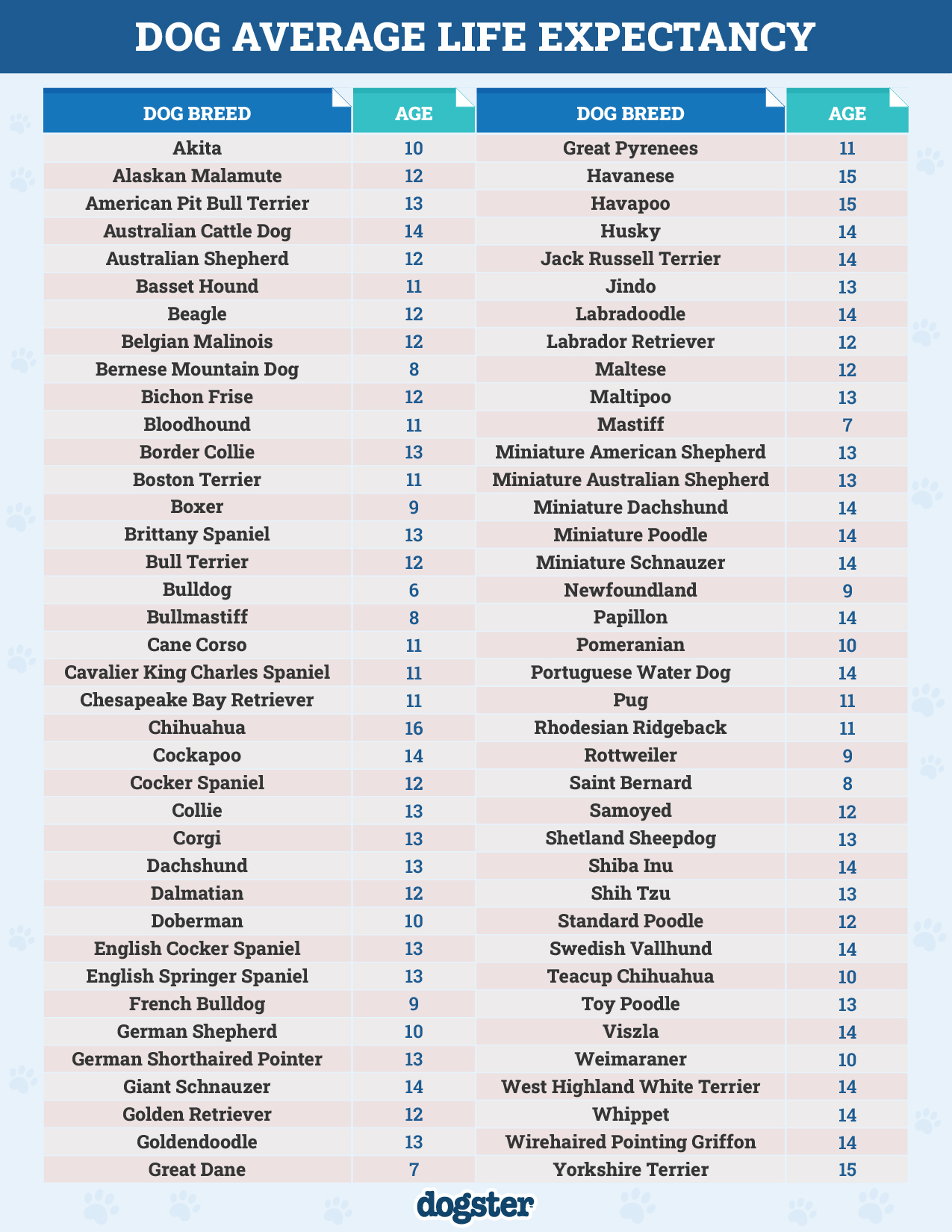
Miniature Schnauzers are spunky German Terriers with big personalities. Like other small breeds, they have a long lifespan; some can live over 14 years. Many factors can impact your Miniature Schnauzer’s lifespan, including their diet, general health, environment, and more. Below, you’ll learn more about a Miniature Schnauzer’s lifespan and how to keep them happy and healthy. On average, Miniature Schnauzers live about 12 to 14 years, with some reaching 15 or 16 years.

How to Help Your Mini Schnauzer Enjoy a Long Lifespan
Feeding & Diet
Miniature Schnauzers may be small, but they need a well-balanced diet to fuel an active lifestyle. The best way to ensure the food you choose gives them everything they need is to make sure it is approved by the Association of American Feed Control Officials (AAFCO).
Like any dog, Miniature Schnauzers can become obese with excessive food and limited activity, which can have a devastating effect on their lifespan. In a study conducted by Banfield Pet Hospital,1 the lifespan of dogs that were overweight was shortened by an average of 2.5 years. It’s important to give your dog appropriate portions and limit treats to no more than 10% of the diet to ensure the appropriate balance and calories.
It is recommended to consult your dog’s diet with a veterinarian every time you are not sure which food to choose for your dog.
If you need to speak with a vet but can't get to one, head over to PangoVet. It's our online service where you can talk to a vet online and get the personalized advice you need for your pet — all at an affordable price!
Environment & Care
Few studies examine the effects of the environment on a dog’s mental health and overall well-being as it relates to lifespan. However, it is well documented that prolonged exposure to stress can negatively affect immunity and health while living in a low-stress, enriched, and predictable environment has a positive effect on well-being.
Dogs kept in crowded conditions, especially without proper hygiene, are more likely to acquire infections. In addition, dogs that live in confined areas without the ability to exercise and relieve stress won’t be as healthy as their active counterparts, especially in a lively breed like the Mini Schnauzer.
Size
In general, small dogs live longer lives than medium or large dogs. Interestingly, the miniature, standard, and giant Schnauzer all have quite similar life expectancies, and compared with similarly sized breeds, the mini Schnauzer lives, on average, 1–2 years shorter.
This could be because of breeding and specific health conditions that are common in the breed, including high cholesterol, pancreatitis, diabetes, Cushing’s disease, liver shunts, and mycobacterium avium complex, a deadly immune disease that was believed to have been passed down through a specific family of Miniature Schnauzers. Fortunately, it can be detected through genetic testing to prevent it from being passed along to litters.

Healthcare
Dogs of all breeds thrive with regular veterinary care. At a minimum, your puppy should see a vet every 3 to 4 weeks for regular vaccinations and parasite prevention. As an adult, your dog should see a vet at least twice a year for an exam, vaccinations, preventative flea and tick control, and blood work.
Visiting a vet regularly is key to a long life. The biannual exams can pinpoint possible health conditions early, giving you a better outcome. Preventative care like vaccinations and parasite control are important for preventing serious diseases. Neutering (spaying or castration) can also improve life expectancy by reducing the chances of getting uterus infections and mammary cancer infections.
Miniature Schnauzers are prone to dental disease, partly due to genetics but largely because of their distinctive beards. The bristly hair around their mouths often irritates the gums and leads to premature development of periodontal disease. Regular cleaning can help keep your dog’s teeth and gums in good health, as can keeping their beards trimmed short. Get your puppy used to having their teeth cleaned from a young age; if introduced early, many dogs will actually enjoy a good brushing!

The Life Stages of a Miniature Schnauzer
Puppy
Miniature Schnauzers depend on their mother for nourishment and protection for the first 3 to 4 weeks of life. At that time, they are weaned from their mothers and continue to develop before they can go to new homes, typically around 8 to 12 weeks.

Adolescence
Adolescence is when a puppy transitions from a toddler to a teenager and is more likely to test boundaries. Your puppy will also experience teething, during which they will lose their puppy teeth and gain adult teeth. Therefore, it’s important to establish boundaries, socialize, and reinforce good behaviors during this phase to produce a well-adjusted adult dog.
Mature Adult
Your Miniature Schnauzer is a mature adult at 12 to 18 months of age. They’re typically close to their full-grown size at about 10-14 inches tall and weigh 11 to 20 pounds. Males may be larger than females. Females usually have their first season (estrus) at around 6-8 months of age, though this can vary. Spaying females between their first and second seasons is usually recommended, but this can be discussed with your vet.
Males will show signs of sexual maturity at any point from 6 months to 3 years, and some will never show any overt signs of testosterone-driven behavior. Castration, once they have reached sexual maturity, will help them feel less frustrated and be less likely to fight with or be attacked by other intact male dogs.

Senior
Smaller breeds, like Miniature Schnauzers, reach senior years around 10 to 12 years old. At this time, your dog may experience age-related declines like a reduction in vision or hearing, arthritis, dental disease, and a general decrease in energy levels. Starting your dog on joint supplements from around 7-8 years old (or younger if they have a history of joint problems) can help to delay the onset of arthritis, further improving their quality of life.

How to Tell Your Miniature Schnauzer’s Age
If you don’t know when they were born, your vet may be able to help you estimate your Miniature Schnauzer’s age based on their general appearance and tooth wear, but it’s difficult to determine the age of a mature dog. Like people, dogs show age differently, and smaller breeds mature faster but age more slowly. It is usually relatively easy to tell when they are less than 2 years old based on their teeth or more than 8 years old based on their eyes.
Dogs over 8-9 years old develop an age-related condition called nuclear or lenticular sclerosis, which gives a hazy appearance to their eyes. This is often confused with cataracts, which appear as a more solid, pearlescent area inside the pupil. In breeds predisposed to diabetes, like the Miniature Schnauzer, it is always worth checking in with your vet if you notice any changes in their eyes.

Conclusion
Miniature Schnauzers are long-lived dogs that stay active and lively throughout their years. If cared for properly, they stay active for several years and don’t slow down until they’re seniors. Though some serious health conditions are common in Miniature Schnauzers, you can promote a long and healthy life with proper diet and veterinary care.
Featured Image Credit: Debra Anderson, Shutterstock



































2 Responses
I have a 10 yr old miniature male Schnauzer
who has lost partial mobility of his left rear leg. Has had this problem for 4 days now my concern is that he'll lose complete use of leg if I don't take to Vet for a check up. What do you think I should do ?
Thanks 😊
Hi Leonard, thanks for reaching out to us. I'm sorry to hear about your Schnauzer's mobility issue—it's understandable that you're concerned. It's definitely a good idea to take him to the vet for a check-up. Loss of mobility could be caused by various factors such as injury, nerve issues, arthritis, or even a disc problem, and a professional evaluation will help determine the cause.
It’s better to be proactive in situations like this to avoid further damage or complications, especially if he is in pain or discomfort. The vet may recommend imaging (like X-rays) or other tests to get to the root of the issue. Early intervention is key, and it will also give you peace of mind knowing what’s going on.
I hope your pup feels better soon! 🙂