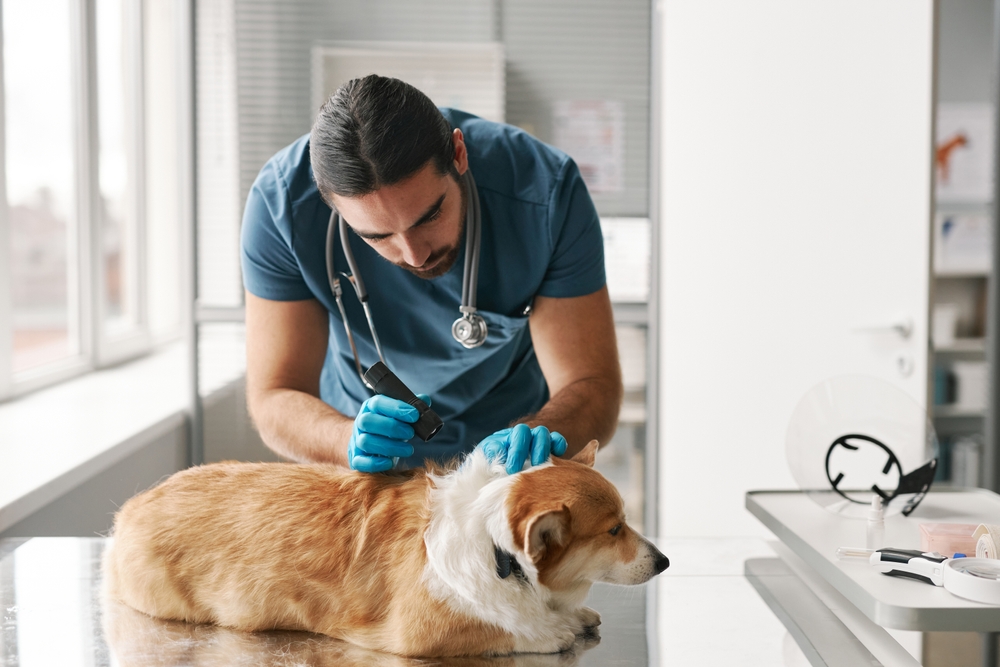
Many of us don’t regularly see the majority of our dog’s skin because of their fur coat. You may get a glimpse at your dog’s skin on their face, ears, and belly regularly, though. This means you’re likely familiar with the appearance of these areas, so you’re likely to notice if there are changes in the color of your dog’s skin in these spots. It’s a good idea to examine your dog’s skin under their coat regularly too, though, so you can familiarize yourself with the appearance and detect any changes, and there are a few reasons that you may notice skin discoloration on your dog.

What Is Skin Discoloration in Dogs?
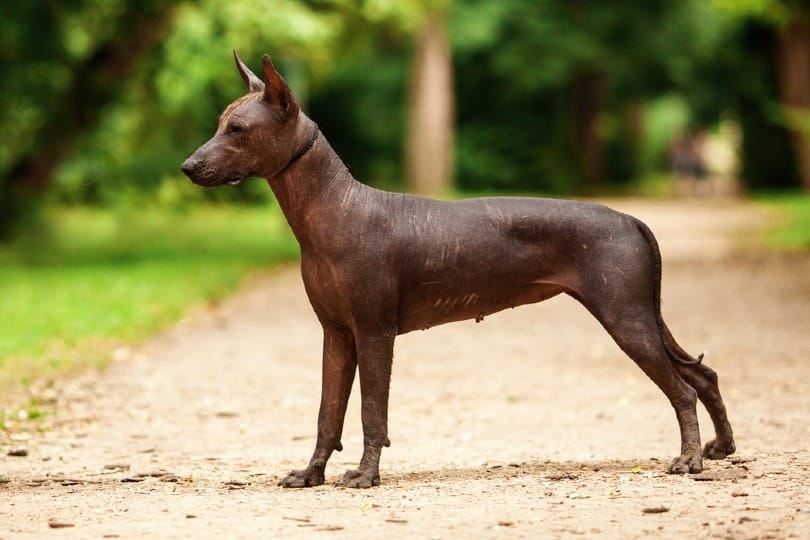
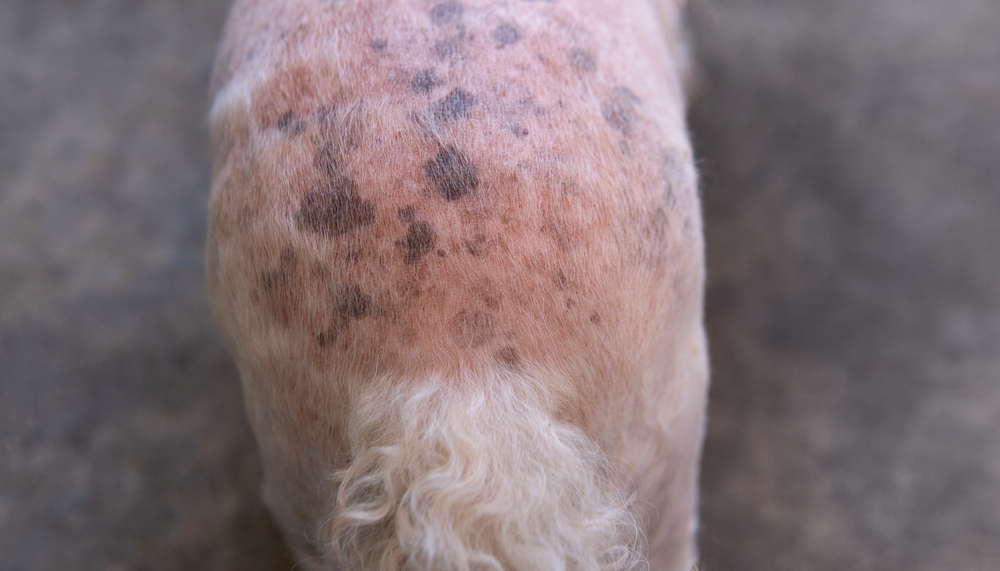
Depending on the pigments in your dog’s skin, your dog can have skin that is a shade of pink or black. In some cases, your dog may have spotted skin, while other dogs have solid-colored skin all over their body. There may be some changes to your dog’s skin as they age, especially as they grow out of puppyhood, but you should familiarize yourself with the appearance of your dog’s skin so you can catch discoloration as it begins.
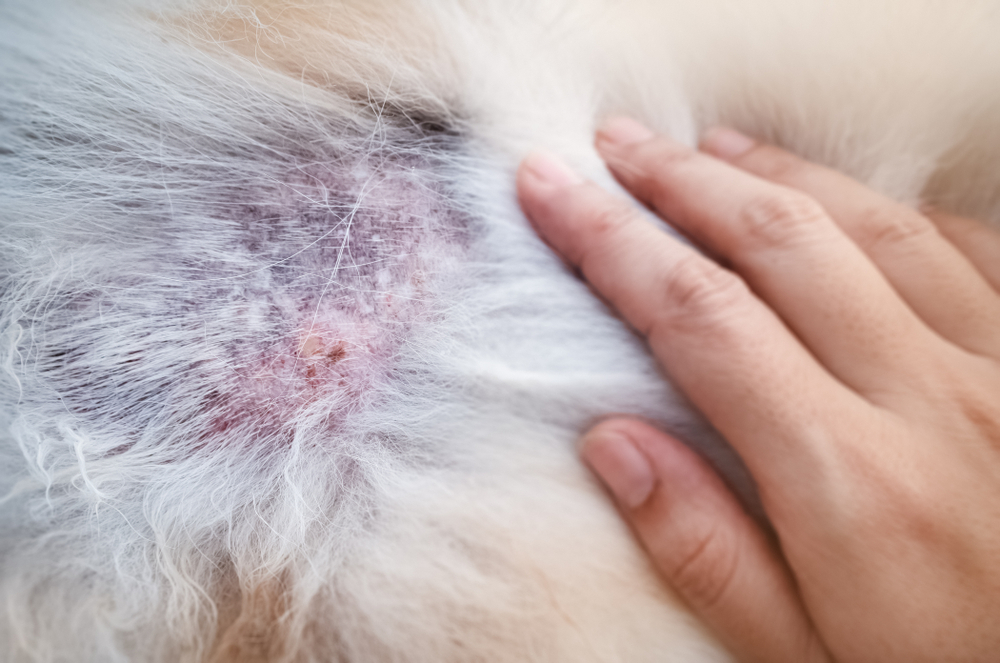
Discoloration will appear as a change in the color of the skin itself, and it may be accompanied by signs of skin irritation, like flaking, crusting, peeling, or redness. The appearance of black or white spots, raised discoloration, red spots, and other unusual changes to your dog’s skin should be checked over by a vet.
What Are the Signs of Skin Discoloration?
The signs of skin discoloration in dogs are obvious—a notable change in part or all of your dog’s skin. However, there are other signs that may be present that indicate there is a problem. Scaly and peeling skin, redness, oozing, itchiness, pain, and an unpleasant odor can all accompany discoloration of the skin.
If your dog naturally has black spots on their skin and you notice more spots appearing as they age, this is likely normal for them, but it never hurts to ask your vet to take a look at the discoloration to rule out any medical conditions. If additional signs of a problem are present aside from discoloration of the skin, then a vet visit is definitely needed.
The 9 Causes of Skin Discoloration in Dogs
1. Hyperpigmentation
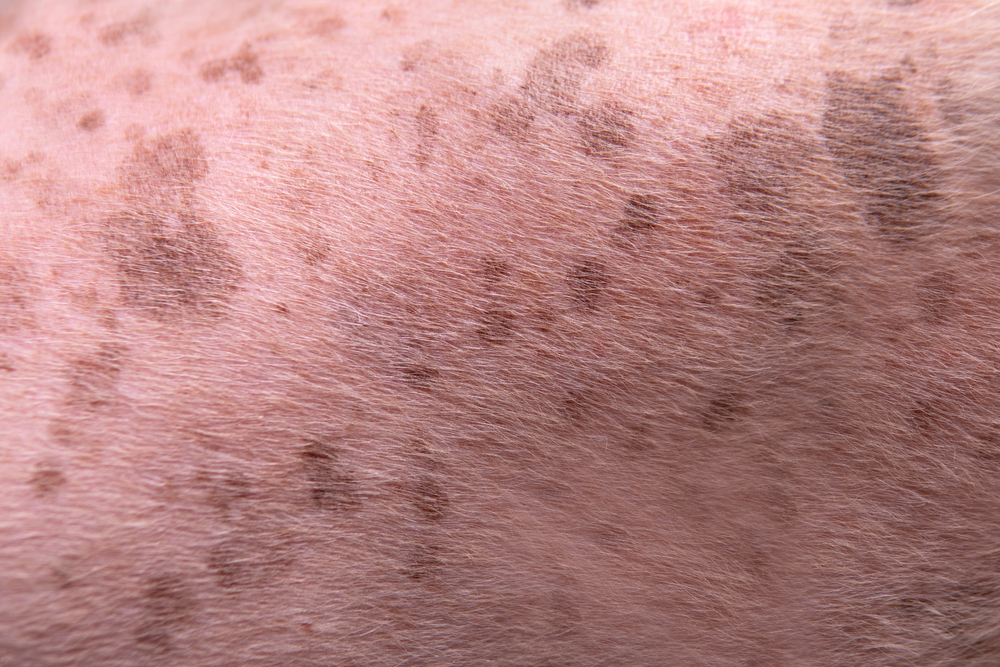
Hyperpigmentation is an increase of pigment in the skin, leading to darkening and discoloration, often a reaction to certain conditions. There is primary and secondary hyperpigmentation. Primary hyperpigmentation is uncommon and most prevalent in Dachshunds. Signs often appear around 1 year of age. Secondary hyperpigmentation is relatively common and is usually triggered by inflammation and/or friction. It is most often seen in dog breeds prone to obesity, allergies, skin infections, etc.
2. Hypothyroidism
Hypothyroidism is one of the most common hormonal conditions in dogs and is caused by a lack of thyroid hormone. It can lead to signs of weight gain, lethargy, hair loss, flaky skin, and increased dark pigmentation to the skin.
3. Allergies
Dogs can suffer from both environmental and food allergies. In some dogs that experience chronic unmanaged allergies, the ongoing inflammation leads to secondary hyperpigmentation.
4. Cushing’s Syndrome
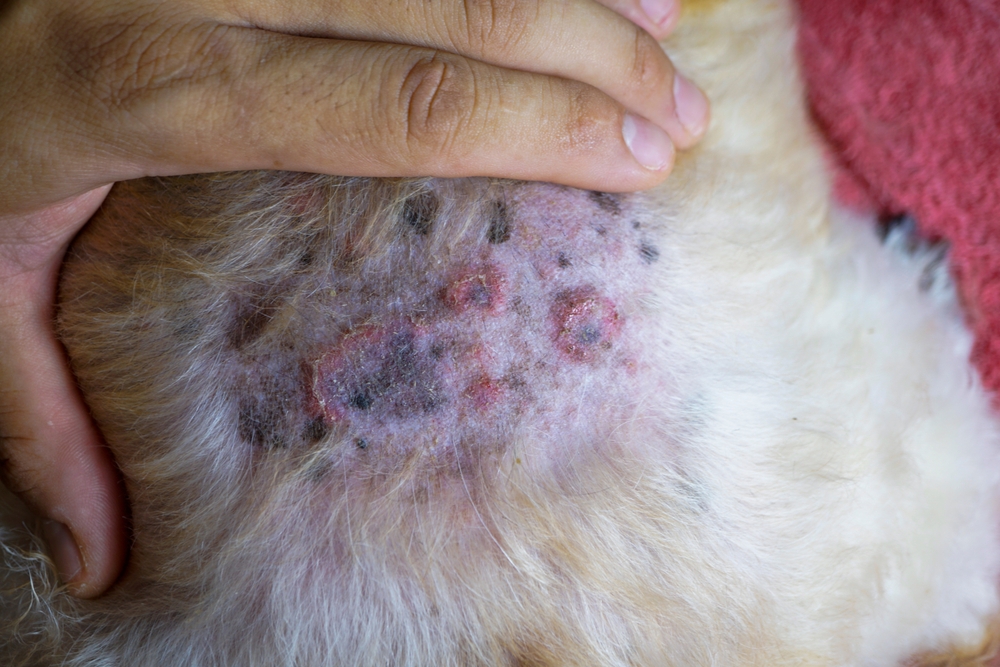
Cushing’s syndrome is an endocrine condition in dogs that is characterized by an increased level of the cortisol hormone in the body. This can be caused by tumors of the pituitary gland, tumors of the adrenal gland and long-term, high-dose steroid use. This condition has many signs, including hyperpigmentation of the skin and hair loss or thinning.
5. Contact Dermatitis
Contact dermatitis is a condition in which the skin is irritated due to being exposed to an irritant. This can be caused by something that your dog is allergic or sensitive to, or things like harsh chemicals. Contact dermatitis typically causes a rash or red, irritated areas of skin, which may leave behind discoloration once healed.
6. Discoid Lupus Erythematosus
Discoid lupus erythematosus (DLE) is an autoimmune skin condition in dogs. DLE most commonly starts around the nose and causes crusting and scabbing as well as a loss of pigmentation leading to a light discoloration of the skin.
7. Infections
Infections of the skin can be secondary to allergies or be caused by problems with the skin barrier, like skin injuries and overbathing. Skin infections can cause changes in skin color, most often through the presence of redness. Scarring from old skin infections can also leave hyperpigmentation behind. Skin infections are most commonly caused by bacteria or yeast.
8. Liver Disease
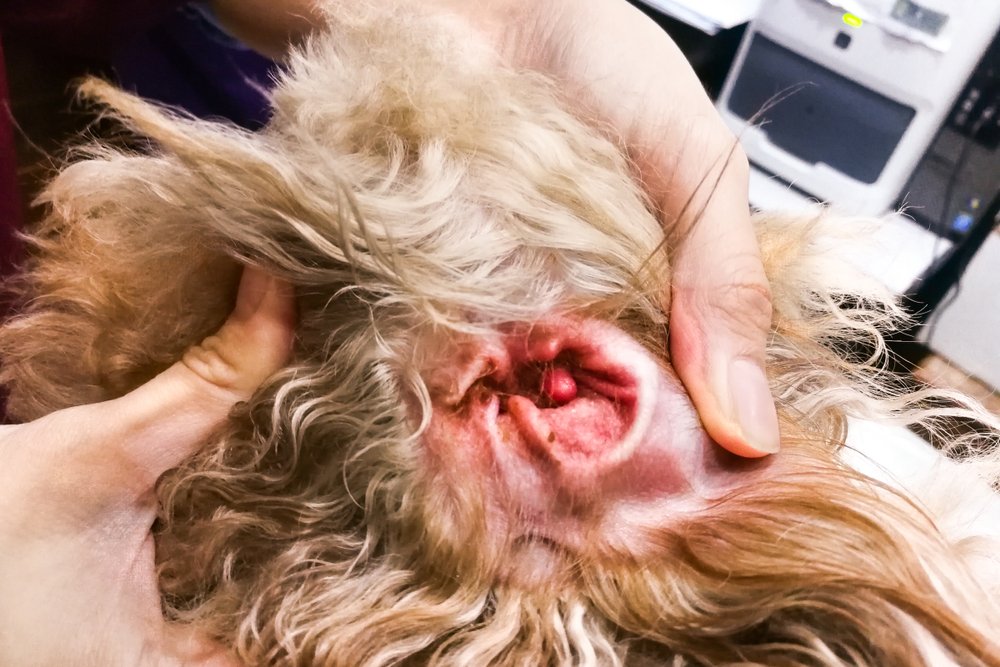
Liver disease can lead to a different type of discoloration of your dog’s skin- jaundice. When the liver is not functioning properly, bilirubin (an orange-yellow pigment) can accumulate. Because of this buildup, the skin, eyes, and mucus membranes can turn yellow. If caught early, the yellow coloration may be minimal, but in more severe cases, the coloration may be as dark as a yellow-orange color. Any yellow coloration of the skin, eyes, or mucus membranes should be considered a medical emergency.
9. Petechiae Bruising
Dogs, like humans, can bruise, which obviously leaves behind temporary discoloration in the area of the bruise. Petechiae bruising is a different type of bruising, though. This bruising appears as red, pinpoint dots. They may appear all over the body, in small areas, and on the mucus membranes. Petechiae can be caused by a variety of issues, from minor injuries to life-threatening illnesses. This condition should always be treated like an emergency until proven otherwise.

How Do I Care for a Dog With Skin Discoloration?
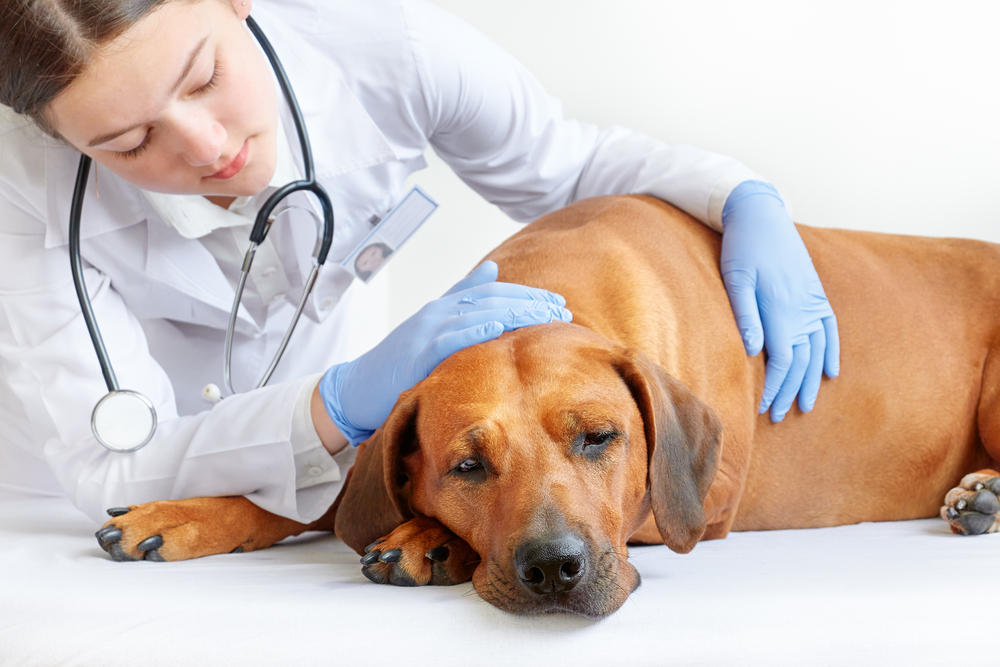
Your vet is the best person to help guide you in caring for your dog’s skin discoloration. In some cases, the expert guidance of a veterinary dermatologist or internal medicine veterinarian may be needed to treat the cause of your dog’s skin discoloration. Hypothyroidism, Cushing’s, contact dermatitis, infections, allergies, and DLE can all be managed or treated with prescription medications.
Yellow coloration of the skin should be immediately evaluated by a vet. This often indicates that something has caused your dog’s liver to stop functioning properly. This can be caused by benign and malignant tumors, liver failure, hepatitis, toxin exposure, infections, congenital abnormalities, leptospirosis, medications, traumatic injuries, and other conditions. Jaundice can also be due to the destruction of red blood cells, for example in dogs with hemolytic anemia. Yellowing of the skin should be taken very seriously and addressed immediately.
Petechiae bruising is also skin discoloration that should immediately be evaluated by a vet. While petechia can be caused by minor traumatic injuries, it can also be caused by serious medical conditions, like blood clotting disorders. It should always be addressed immediately.
If you’re concerned about your pet’s well-being, we recommend consulting a veterinarian.
If you need to speak with a vet but can't get to one, head over to PangoVet. It's our online service where you can talk to a vet online and get the advice you need for your pet — all at an affordable price!

Frequently Asked Questions
How Long Will It Take for My Dog’s Skin Color to Return to Normal?
The answer to this question depends on the cause of the discoloration and factors specific to your dog, like their natural skin color and immune system function. Some skin discoloration may be permanent, while some may disappear once the condition causing the discoloration is treated.
How Do I Know if I Should Be Concerned About Discoloration on My Dog’s Skin?
Generally speaking, if discoloration appears rapidly, appears after a traumatic injury, appears as a raised area, or is accompanied by other signs of a problem, like skin flaking and oozing, then you should have your dog evaluated by the vet as soon as possible. If you notice that your dog naturally has dark spots on their skin and you notice that they develop new spots that are flat on the skin and not accompanied by signs of a problem, then there is less urgency but it’s still best to get it checked by your vet to be on the safe side.
Should I Be Concerned if the Discoloration on My Dog’s Skin Is Accompanied by Hair Loss?
Yes, it’s a good idea to have your dog checked over by the vet if they are experiencing notable hair loss, especially if it is leaving thin or bald patches.

Final Thoughts
Skin discoloration can be a normal occurrence for some dogs, but is usually secondary to other conditions that need addressing. So, any time you’re unsure about a spot or generalized discolored area on your dog, you should have your vet take a look. It can be easy to miss skin problems in dogs, especially if they aren’t losing hair or excessively scratching or licking the area. Make it a habit of checking your dog’s skin thoroughly once every month so you can monitor for any changes.
Featured Image Credit: SeventyFour, Shutterstock