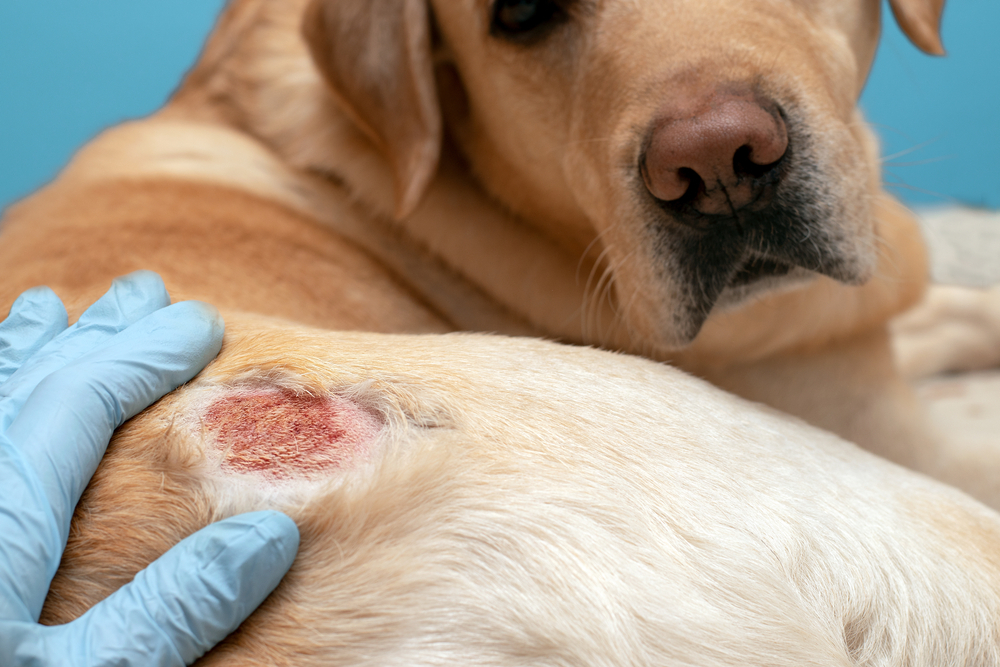
Skin issues are relatively common among canines, but some are more common than others. The signs range from mild to severe depending on the cause. It’s always best to book an appointment with your vet if you notice a problem with your dog’s skin. Most skin issues are fairly easily treated with medications, ointments, or oral medication once diagnosed, but can become more serious and difficult to treat if left.
Below, you can read up on 12 common skin issues in dogs! We’ll tell you what each one is and how it appears on a dog, as well as what can be done to remedy the situation should it occur.

The 12 Common Skin Issues in Dogs
1. Acral Lick Granuloma
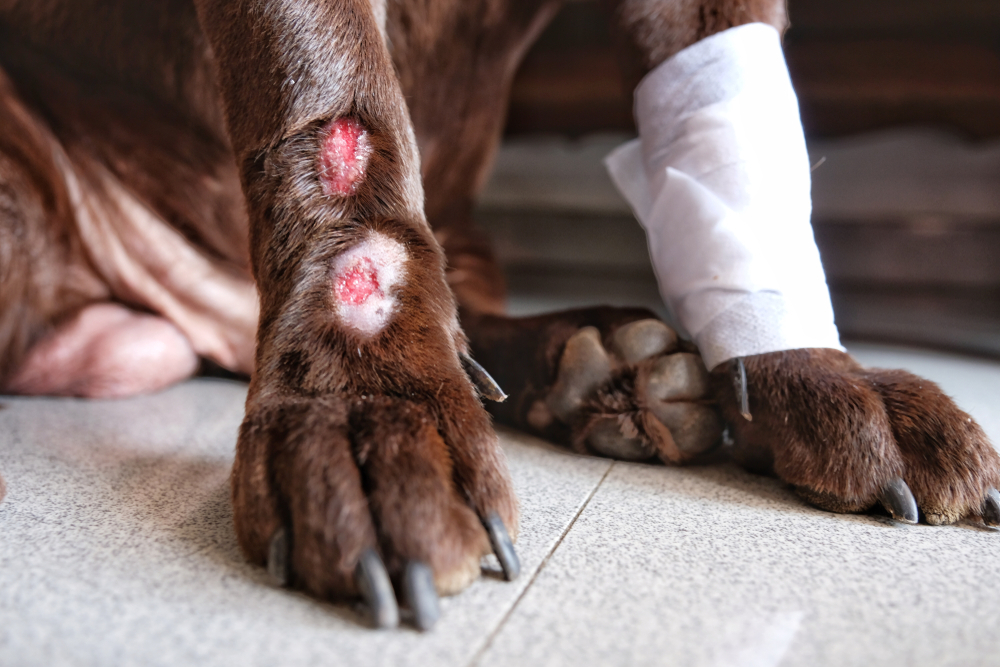
Does your dog ever have a tendency to start licking in a single spot almost obsessively? Then, you might have dealt with acral lick granuloma before. Also known as acral lick dermatitis, this skin condition occurs when a dog licks relentlessly at one area of their body. Typically, this will be on the lower leg, but it can be elsewhere, too.
Because the dog’s tongue keeps irritating this area, it can’t heal. The pain and itchiness that comes with not healing cause the dog to lick even more, resulting in a vicious cycle. There are many potential causes for lick granulomas to develop in the first place, including itchy skin and pain from arthritic joints, anxiety and compulsive disorders may also play a role. With this skin condition, one has to discourage their pup from licking, often with a dreaded cone of shame, while following your vet’s advice to manage and treat underlying conditions.
2. Skin Allergies
Skin allergies are quite common in canines and can be caused by various things.
Food allergies in dogs most often involve animal proteins, like beef, dairy and chicken, but occasionally, a dog can be allergic to items such as gluten. When a pup has food allergies, they often experience itchiness particularly on the face, ears, anus, and feet. They may also suffer from gastrointestinal signs like diarrhea.
As with people who have food allergies, dogs must do an elimination diet to determine what they are allergic to so that food can be cut from their diet. Speak with a vet before starting any kind of elimination diet, though, as they can tell you how to go through the process for the best results.
Other things commonly cause skin allergies, too, like things in the environment. When environmental allergens come into play, the allergy is known as atopy, which also causes itchiness and skin irritation leading to redness, hair loss and recurrent skin and ear infections. Common environmental allergens include pollen and house dust mites.
Treatment for atopy will look different for each dog but usually involves medication to stop the itch, topical shampoos to treat any skin infections. An allergy vaccine (immunotherapy) can also be helpful in some canines. You should work with your vet to determine the best course of action for your pet.
3. Flea Allergy Dermatitis (FAD)
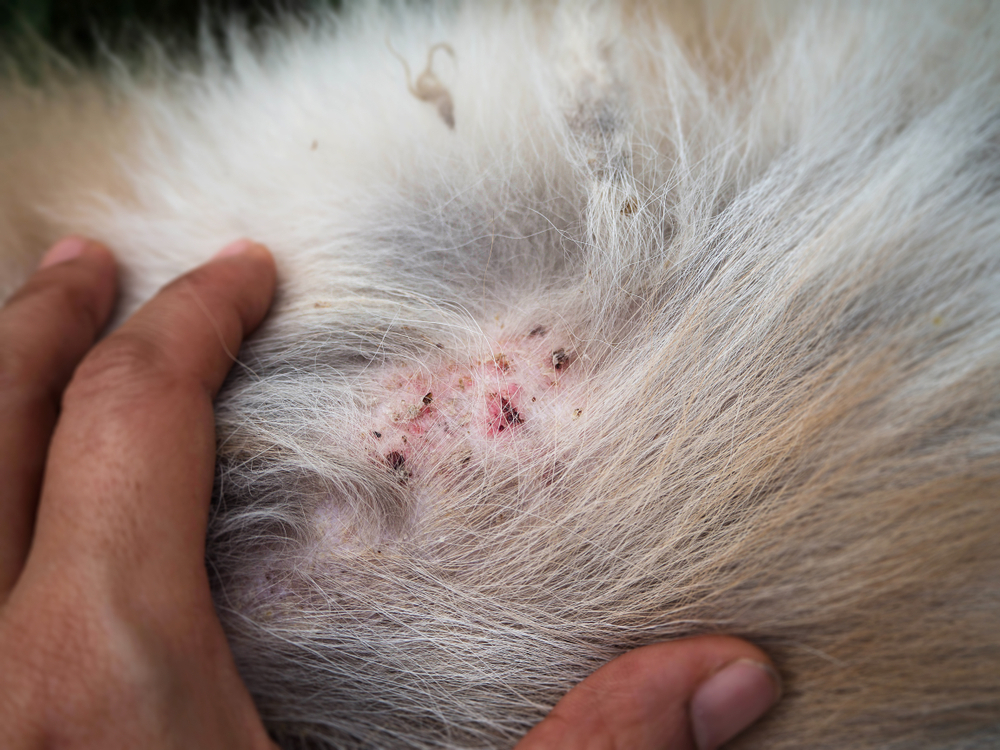
This is another common skin disease in dogs. Also known as flea bite hypersensitivity, FAD is an allergic reaction to flea saliva injected by the bites of fleas. This causes frequent itching and scratching, hair loss and scabs. It typically affects the back end of the body more than the front. Fleas and flea dirt may be visible, however, just because you don’t see them, it doesn’t mean they are not there!
If your dog has a flea allergy the most effective thing you can do is give them regular, preventative vet prescribed flea treatments as it only takes one or two bites for a dog with FAD to start itching.
If you are concerned about the health and well-being of your pet, we recommend getting in touch with a vet for guidance.
If you need to speak with a vet but can't get to one, head over to PangoVet. It's our online service where you can talk to a vet online and get the advice you need for your pet — all at an affordable price!
4. Dry Skin
Dry skin is another fairly common problem in canines. If you look beneath a dog’s fur, you’ll probably still notice scaly skin with or without dandruff, but you could also only see inflammation and redness if the dog has been scratching. Dry skin can be caused by a variety of factors, such as low humidity, allergic reactions and dehydration.
The treatment for dry skin will depend on the cause. Essential fatty acids supplements can improve skin and coat health. If it’s a matter of low humidity, a humidifier could help. Even a moisturizing shampoo designed for dry skin, like an oatmeal shampoo, could be helpful. Do not put your own lotion on your dog, though, as it could be extremely harmful!
5. Dandruff
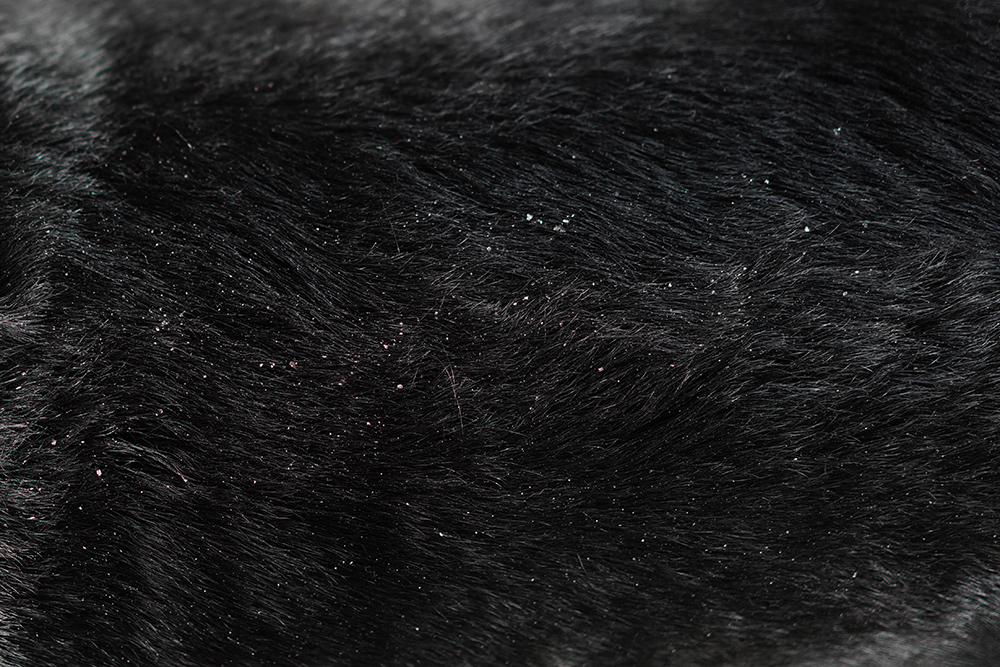
Yep, dogs can get dandruff, too! As well as dry skin, other causes of dandruff or seborrhoea include allergies, skin infections, mites, hormone imbalances and nutritional deficits. Some dogs are prone to primary seborrhoea, an inherited form of dandruff which affects how the skin cells are made and replaced. This is more common in certain breeds such as Cocker Spaniels, West Highland White Terriers and Basset Hounds and signs usually start earlier in life.
As dandruff can have many underlying causes it’s important to consult with your vet before starting treatment. It can often be treated with a medicated shampoo, but never use human dandruff shampoo on your dog. If it isn’t a genetic condition, your vet will need to identify and treat the underlying cause to ensure the seborrhea doesn’t happen again.
6. Demodectic Mange
Mange is a bit of a scary word, but the good news is that demodectic mange usually isn’t contagious to people and other dogs, even though mites are the cause of it. The bad news is that when canines develop demodectic mange, they can experience bald spots, sometimes with sores and scabs. If your pup is developing bald patches, it’s definitely time for a vet visit. Your vet may recommend topical and/or oral medication.
7. Sarcoptic Mange
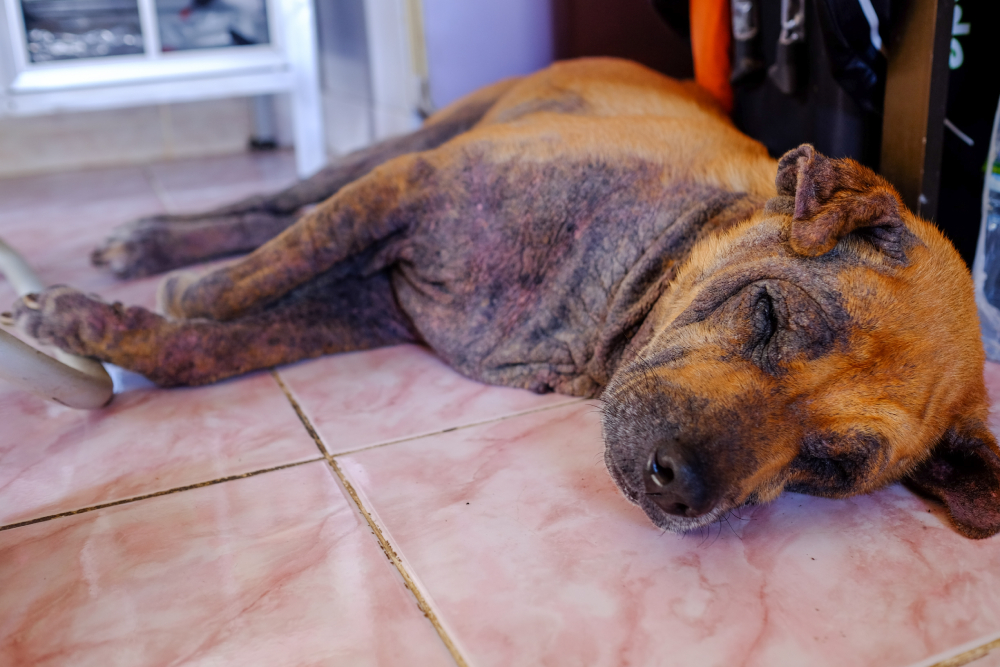
Sarcoptic mange, otherwise known as scabies, is caused by Sarcoptes scabiei mites. It is extremely itchy and typically shows up on a dog’s ears first. Unlike demodectic mange, this kind of mange is very contagious and can spread quickly among dogs and it can be spread to humans, too, but the mites don’t tend to survive long on human hosts.
Dogs with this sort of mange may scratch ceaselessly or be restless, leading to inflammation, scabs, sores, and bald patches. This is another skin condition that will require a vet’s help, as they will need to prescribe shampoos and medications for the infected dog. Bedding, blankets, and the such will also need to be thoroughly washed.
8. Folliculitis
Folliculitis are hair follicles that have become inflamed, most commonly due to a bacterial infection. This usually results in scabs, sores, and bumps on the skin as well as hair loss. These are much easier to see on dogs with short hair.
If your dog has any of these signs they will need to be examined by a vet. Treatment may involve medicated shampoos, antibacterial ointments, or oral antibiotics.
9. Hot Spots
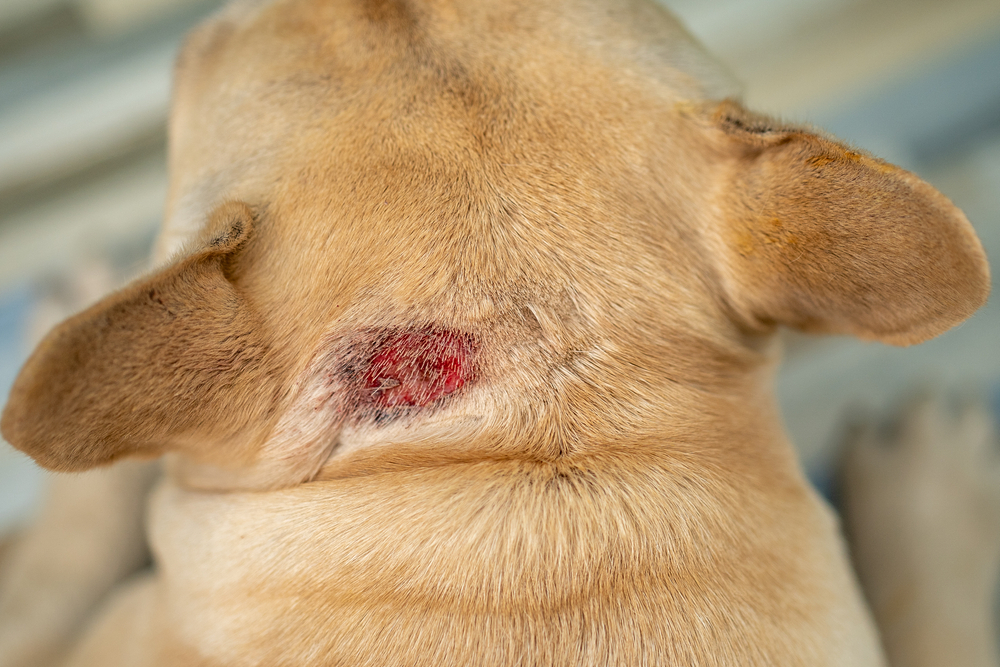
You’re probably at least a little familiar with hot spots. Also known as acute moist dermatitis, hot spots are red, inflamed, sore areas on a dog’s skin. They are typically oozy and can be smelly. This sort of dermatitis can be caused by various issues, like insect bites, excessive licking, allergies, and infections.
Hot spots usually come up suddenly and increase in size quickly if not treated, so you should contact your vet if you notice one developing. The area usually needs to be cleaned, and topical or oral antibiotics may need to be prescribed, sometimes along with other anti itch medications.
10. Impetigo
Impetigo is most common in puppies. This bacterial infection can also indicate other underlying problems, and causes pustules and crusts, typically on a puppy’s belly.
They are not usually itchy or painful and mild cases may resolve on their own. Affected dogs may need bathing with medicated antibacterial shampoos and sometimes oral antibiotics. You should always seek advice from your vet.
11. Ringworm
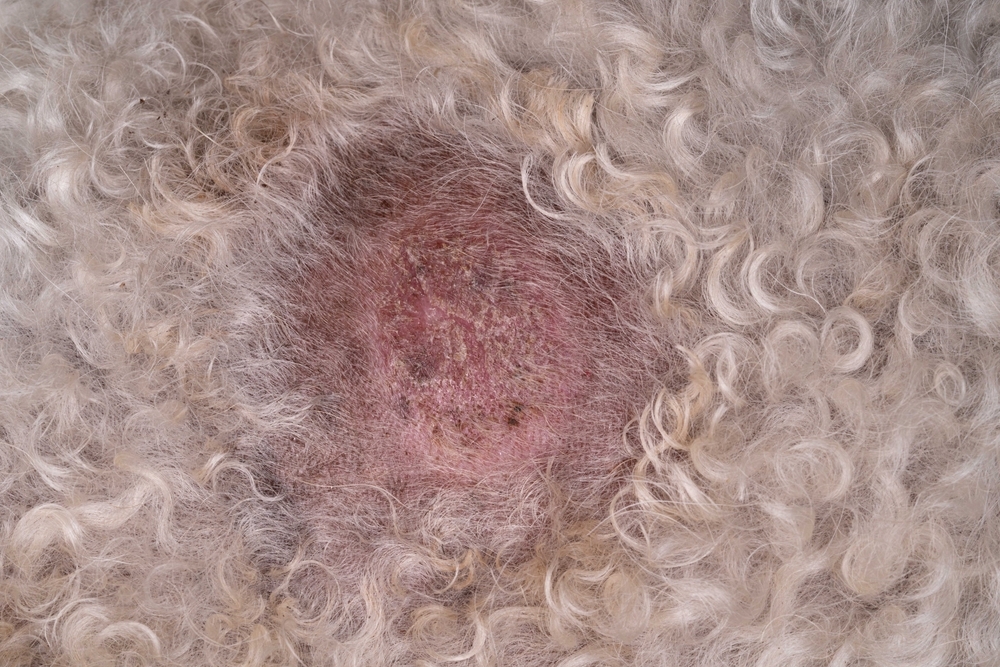
If a dog has ringworm, they don’t actually have any kind of worm; they have a fungus. Dogs with ringworm have hair loss, usually in patches with a crusty covering. As other conditions look similar it is important to visit your vet for advice and treatment if you think your dog may have ringworm. This condition is highly contagious not only to other animals in the home but also to humans, so it needs to be dealt with as soon as possible. Puppies, in particular, are more susceptible to this fungus.
Depending on the type and how severe the ringworm is, dogs may be treated with topical medications and/or oral medication.
12. Yeast Infections
Our final common skin condition in dogs is yeast infections. Yeast loves growing in warm, hard-to-reach areas, such as the groin, between the toes, in skin folds, or in the ear canal. Itchy, irritated skin with a distinct odor may indicate a yeast infection. Treatment for this includes medicated washes, creams, and oral medication.
Conclusion
Several skin issues occur commonly in dogs, many have similar signs and so a visit to the vet is important to diagnose and effectively treat the problem. Most should clear up relatively soon once appropriate treatment begins. Always check with your vet if you notice something off about your dog’s skin, to ensure there isn’t anything serious going on.
See also:
- Why Does My Dog’s Skin Smell Bad and Itch?
- Can I Put Antibiotic Ointment on a Dog? Vet Approved Facts & Guidelines
Featured Image Credit: fetrinka, Shutterstock
 The 12 Common Skin Issues in Dogs