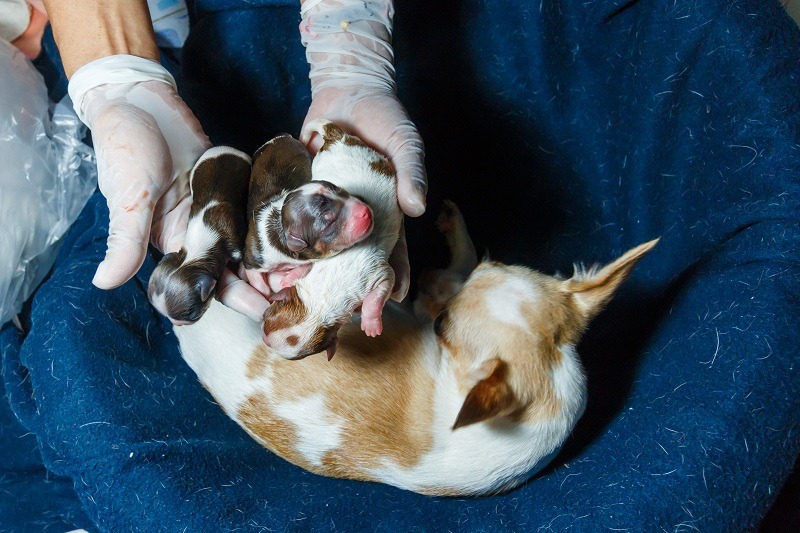
Cesarean sections are an operation whereby an incision is made in the abdomen and womb and the baby, or puppy, is delivered through this cut.
The cesarean section, or C-section, is performed in cases where natural birth would harm the puppy or the mother, or where it just isn’t physically possible. While it is possible with any breed, some breeds require this type of delivery in almost all cases. The Boston Terrier, English and French Bulldog, Pug, and Chihuahua are known for having a higher risk for birthing complications. The puppies would get stuck without a C-section. C-sections may also be necessary because of any physical and health problems of a specific dog, regardless of breed.
The procedure is common, and with both emergency and elective C-sections, dam and puppy survival rates are high, although there is a greater rate of puppy mortality associated with emergency cesarean sections.
Although generally considered safe, these operations are not without risk and do take some time to recover from. As the pet owner, you will need to ensure mom is eating and drinking. You may have to provide pain relief to the mom and help with the puppies while she recovers.

Important Considerations
If your dog is pregnant, it’s crucial to establish a good rapport with your local vet and be familiar with their working hours and fees in case you need professional help during labor, especially overnight. This article is meant to provide useful information for owners of whelping dogs, and has been approved by a veterinarian, but is not a replacement for direct veterinary advice and physical examination. For inexperienced owners and first-time doggy mothers, or brachycephalic breeds, labor is a stressful experience, and unfortunately, sometimes things don’t go as planned. Discussing risk factors for each particular case with the vet is crucial so a plan can be made well in advance of the expected date of delivery.
The following signs are an indication of serious labor complications, and you need to contact your vet urgently:
- Your dog is in distress or breathing heavily
- She is passing bloody discharge or pure blood that is not stopping within a few minutes
- She is in labor for more than 2 hours without delivering a puppy
- She is continuously straining for 20 minutes or more without passing a puppy
- There is thick green discharge and no puppies are born
- There has been 2 hours or more since the last puppy
- Puppy or a fluid filled sac is stuck in the birth canal for a few minutes, with the dog straining
- Your dog is lethargic or has a high temperature (over 39.4℃ or 103℉)
- Puppy is in breech position, coming out with tail first and getting stuck
What Is a Caesarean Section?
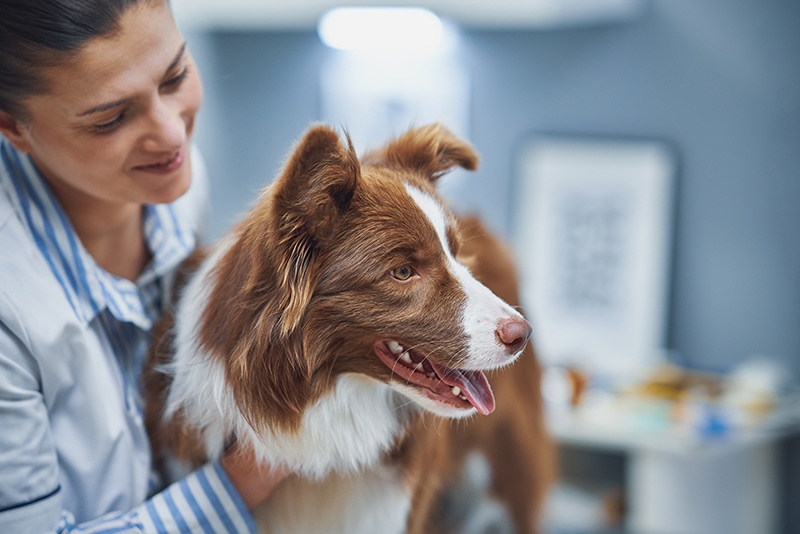
A cesarean section is the delivery of a puppy through a cut made in the abdomen and womb. The puppies are removed directly from the uterus.
An emergency cesarean is performed when there is a physical or functional problem that has prevented the natural birth of the puppy, also called dystocia. This may be due to the puppy size, especially if there is only one large puppy present (but this is not a rule), or relatively oversized puppies in comparison to the mother’s size, large litters, abnormal position of the puppy in the birth canal causing the puppy to get stuck, any abnormalities in the mother’s birth canal, uterine torsion, underlying illness, obesity, or uterine inertia, or fatigue that causes weak contractions or none at all.
The procedure may also be planned in advance and carried out electively in some cases. An elective cesarean is most often carried out on dogs with existing health complaints, or those of breeds with certain physical characteristics that would prevent a safe, natural birth. Your vet can perform certain blood tests to check when is the right time for the cesarean, ensuring the puppies are fully developed and ready to be safely delivered.
Elective procedures are commonly carried out for the following reasons:
- Systemic illness in the mother dog
- Very large litters, particularly in at-risk breeds (brachycephalics)
- Relative fetal oversize
- Previous cesareans and birthing difficulties
- Known pelvic and birth canal injuries/abnormalities making natural birth impossible
Post Operative Recovery
The cesarean section is considered major surgery. How easily the dam recovers from the procedure depends on a lot of factors, including whether it was an elective or emergency procedure. If the C-section was an emergency procedure, dogs that underwent several hours of labor before the surgery was performed will take longer to recover.
Anesthesia Recovery
The mom will have been given general anesthesia. Assuming no allergic or negative reaction to the anesthetic or complications during the procedure, she should recover from this quickly, as soon as the drug is eliminated from her body. Typically, she will have fully recovered from the anesthesia by the time she is discharged and sent home. However, it can take 6 hours or longer for her to perk up, and if your dog is still under the influence when she returns home, you will have to closely monitor her to ensure that she does not react badly, fall over, or come to any harm. If she is with her puppies, this includes monitoring to ensure that she doesn’t roll on and hurt any of her puppies.
Eating and Drinking
It is highly unlikely that she will want to eat or drink within the first few hours, but then she may be interested in food and water again. Offer small amounts of both every 20 minutes or so until she has eaten.
If you give her too much food or water too quickly, it can lead to vomiting.
Within 24 hours, ensure that you are feeding a high-quality, premium food, often puppy food, and expect mom to eat more, as her caloric needs will increase 2-4 times in comparison to a healthy adult dog. Depending on the litter size, it’s best to keep offering the food regularly throughout the day to ensure she is eating as much as she wants to, as her energy needs will be very high in the first 3-5 weeks of nursing. Afterward, this decreases and returns to normal by the 8th week when puppies are completely weaned.
Nursing
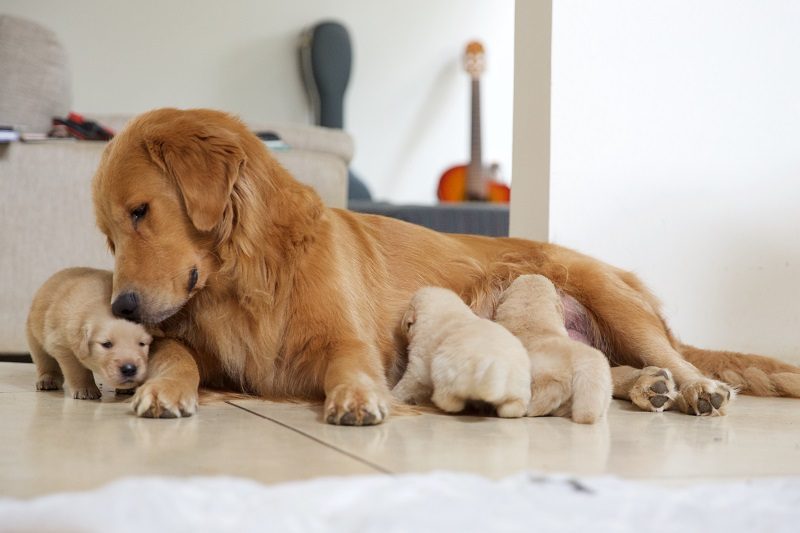
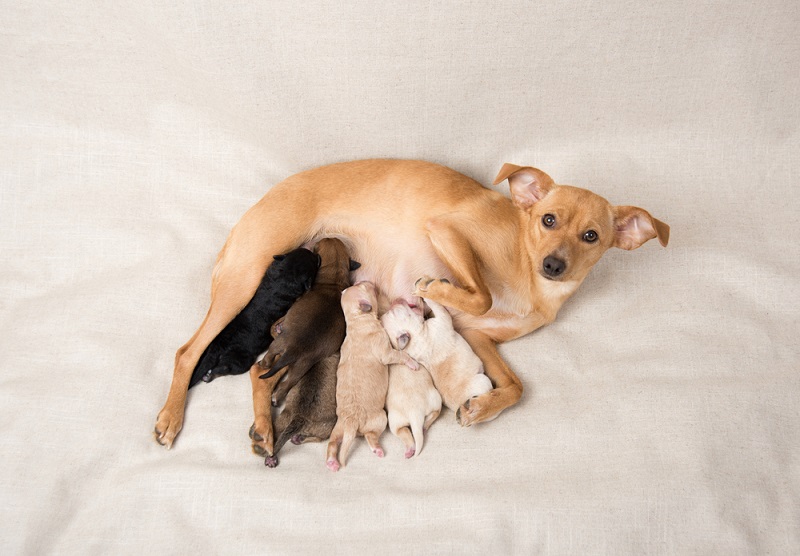
Do not leave mom with her puppies until she has fully recovered from the anesthesia and is showing an interest in her babies. Once this happens, you can help by introducing the puppies and mom. Encourage mom to lay still, give her emotional support, and then gently place the puppies near her teets. Usually, puppies will naturally latch on, but some may need more help, and you may need to encourage the mother to lactate by massaging the teat. This should encourage the puppy to start suckling. Bonding between the mum and puppies is very important and should not be rushed or interrupted, as often, especially if this is her first litter, the mother may be confused, in pain, and stressed after the cesarean.
Bloody Discharge
It is normal for the mother dog to experience a small amount of bloody vaginal discharge for up to a week following the birth. While the discharge can be quite heavy initially, it will usually diminish over the first week and should stop by day seven. If it does not stop, is getting more abundant, changes color, or starts to smell, and your dog does not seem like herself, you should consult your vet and get her checked for signs of infection.
Stitch Removal
There are different types of sutures, or stitches, that are used following a C-section. Dissolvable or absorbable stitches inside the skin naturally dissolve and do not need to be removed. Those that do need to be removed are easily visible and will need to come out approximately 7-10 days after the operation. Staples also need to be removed after this same period. Your vet will instruct you on how to monitor the wound to make sure there are no signs of infection, such as redness, swelling, discharge, pain, lethargy, or fever.
If you have any concerns about your dog or their health, we recommend you contact your vet directly.
If you need to speak with a vet but can't get to one, head over to PangoVet. It's our online service where you can talk to a vet online and get the advice you need for your dog — all at an affordable price!


Cesarean Section Post-Op Care
Cesarean sections are a type of major surgery that enables a vet to deliver puppies through a cut in the womb and abdomen. Emergency and elective C-sections are both used, with the latter proving more successful and less dangerous. In both cases, there are steps that you can take to help mom and puppies recover from this procedure. Above all, ensure that babies are nursing, mom is eating and drinking, and there are no signs of infection following the operation.
See also:
Featured Image Credit: Wanida Tubtawee, Shutterstock
 Important Considerations