Chewing is an instinct for dogs and any canine can exhibit it. Sometimes, dogs chew out of frustration, to relieve anxiety, or because they are hungry.
Blankets are a favorite object for some dogs to chew on, leaving their owners baffled as to what’s behind the behavior. It’s not just the blankets they chew on; any stray blanket is a target. There are several motivations for this behavior; your job is to figure out which one is behind your dog’s behavior.
Below, we’ll discuss six possible reasons dogs nibble on blankets and some ways to redirect the behavior.

The 6 Possible Reasons Dogs Nibble on Blankets
1. It Provides Entertainment
Biting, nipping, and nibbling come naturally to dogs. If you watch a litter of puppies play with each other, you’ll notice that they nibble and bite one another in play. If they bite down too hard during play, the other puppy will yelp to let them know it hurts. This is also the way young puppies learn the concept of bite inhibition, which is an important life skill.
Some dogs outgrow their chewing behavior in puppyhood, while others chew their whole lives. Some dogs may be more likely to nibble blankets well into adulthood due to their natural chewing instincts especially if combined with a need to entertain themself, if there is nothing more exciting to do. Large dogs may be often mistakingly considered more prone to destructive chewing than small dogs, but this isn’t because small dogs don’t chew. Owners simply notice the chewing of large dogs more because they can do more damage.
Any dog who nibbles can develop a chewing habit. It’s a self-rewarding behavior. Once your dog learns that chewing on blankets is fun, they will keep doing it. It can also be a calming and soothing activity that helps them relax. Some owners harness this quality to teach their dogs to settle, particularly with high-energy breeds like Border Collies or German Shepherds who have difficulty finding an “off switch.”
The catch is that your dog has to know what is acceptable to chew on and what isn’t, and that they don’t end up swallowing any parts of the blanket or other inedible material. This may cause a blockage of the stomach or intestines, that will require surgery.

2. Your Dog Is Hungry
Sometimes, dogs chew on inedible items because they lack calories and nutrients in their diet. Even if it seems like your dog is eating well, it’s possible that their food isn’t meeting all of their needs. Other signs of a nutritional deficiency include a change in feces, hair loss, and low energy levels.
It’s important to ensure that your dog’s daily caloric requirements are met to maintain their energy levels. If you notice your dog is less active, less interested in activities, losing weight, having a poor coat, or lying around a lot, they may not be getting adequate nutrients in their diet.
Carefully choose your dog’s food to ensure it contains all the nutrients necessary for your dog’s health. Checking the ingredient list is an easy way to determine the quality of dog food. It’s best only to purchase brands that adhere to the standards set by the Association of American Feed Control Officials.
3. Your Dog Is Bored
Dogs who spend long periods alone get bored. Boredom plays a significant factor in unwanted behavior, ranging from chewing on household objects to excessive barking. A good way to prevent your dog from chewing on blankets out of boredom is to ensure they have adequate exercise and attention before you leave for the day. When possible, it’s a good idea to get someone to take your dog for a walk at midday. If this isn’t an option, take your dog for a walk or run when you get home to burn off their pent-up energy.
While dogs enjoy consistency in their routine, they also love to explore and experience new things. Sometimes, mixing up your routine a bit can take the edge off your dog’s boredom. Try a new dog park, a new walking route, scent work, or take them for a swim. They might enjoy the change of pace.
When your dog is home alone, they may have difficulty discerning what is and isn’t okay to chew on. It’s your job to show what is acceptable. It’s crucial to provide a selection of safe toys and chews. If there are objects you want to remain strictly off-limits when you’re not there, store them in a secure area. If your dog chews and swallow parts of toys, they may need to be supervised at all times, crate trained for when you’re not at home, or assessed by a behaviorist for more personalized advice.

4. Your Dog Is Stressed
Dogs experience stress just like people. They can be stressed by moving to a new house, new surroundings, loud noises, or being home alone. Some dogs are more prone to experiencing stress and anxiety than others, but all dogs become stressed occasionally.
Signs that your dog is feeling stressed include pacing, constant yawning or licking, a decreased appetite, howling, whining, or an increase in sleep. Nibbling on blankets can be a way for your dog to relieve their stress. Much like a comfort object used as a toddler, your dog learns that chewing a blanket makes them feel better, taking their mind off things, and they will resort to this behavior anytime they’re feeling anxious.
If your dog is stressed because of a move or because they’re new to the household, it’s best to be patient. You can provide appropriate objects to nibble on, and most dogs will adapt to their new surroundings after a few weeks. If your dog suffers from separation anxiety, consult a vet on how to help your dog gradually adapt to spending time alone.
If you need to speak with a vet but can't get to one, head over to PangoVet. It's our online service where you can talk to a vet online and get the advice you need for your pet — all at an affordable price!

5. Your Dog Is In Pain
Pain is usually a short-term issue. Teething puppies will chew on anything to numb the pain in their mouths. Offering frozen chew toys or a wet facecloth to chew on can ease their pain. Some dogs also suffer from allergies and may rub and nibble on blankets to relieve their suffering. Similarly, an injury can cause your dog to seek comfort through blanket nibbling.
Figuring out the source of pain and relieving it will stop your dog’s nibbling behavior.

6. Premature Weaning
Another possible reason dogs suck or nibble on blankets is that they were prematurely weaned from their mothers. Puppies should remain with their mothers for at least 8 weeks after birth, but this doesn’t always happen for various reasons. It’s not always an owner’s fault; occasionally, it’s completely out of anyone’s control.
However, behavioral problems can arise in puppies who were prematurely weaned especially if they also haven’t been properly socialized.
In the case of blanket nibbling, puppies instinctively suckle their mother, so when mom’s not there, they find something else to suckle on. A soft blanket is often the next best thing.
Is Blanket Nibbling Harmful to My Dog?
No, blanket nibbling isn’t harmful to your dog as long as they’re not consuming the fabric. If your dog’s blanket nibbling is bothersome to you, it’s best to redirect the behavior to a single blanket that belongs to your dog. Your dog can quickly adapt to chewing on “their blanket” only and not on yours.
On the other hand, if your dog has a tendency to eat parts of the blanket, that’s a completely different story. Ingestion of such material could cause a gastrointestinal blockage that requires veterinary attention. In this case, your dog should not be allowed to chew blankets and should be offered safe and edible dog appropriate chews.
Another exception to this is if your dog has anxiety or pain. If that is the case, you’ll need to make an appointment with your veterinarian.
How Do I Stop My Dog’s Blanket Nibbling Behavior?
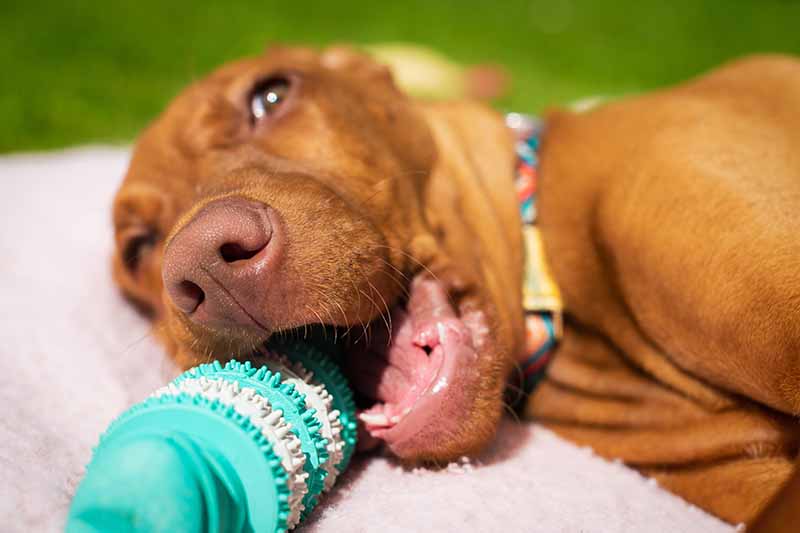
As stated above, chewing is best redirected to a more appropriate object. Giving your dog a long-lasting safe and edible chew or several chew toys that they can chew on will often solve the problem.
Training your dog on what they can and can’t chew on can also stop unwanted chewing. Teach your dog the words “No” or “Leave.” Issue the command when they are chewing on an inappropriate item and replace it with a chew toy. Use positive reinforcement and praise when your dog chews on their toys.
Summary
Dogs nibble on blankets for various reasons, often as a source of comfort, to satisfy their chewing instincts, or to pass the time. Dogs can also nibble if stressed, lonely, or in pain. Now that you know the signs to look for, you can determine why your dog is nibbling on blankets and whether you need to take extra measures to stop the behavior.
You may also be interested in:
- Best Anti-Chew Sprays for Dogs – Reviews & Top Picks
- Why Does My Dog Chew and Bite His Feet? 7 Reasons for This Behavior
Featured Image Credit: IAKIMCHUKIAROSLAV, Shutterstock
 The 6 Possible Reasons Dogs Nibble on Blankets