
In this article
When you bring your pet home from surgery, it’s normal to have worries, questions, and concerns about how to look after them while they recover. One aspect of post-operative care is keeping an eye on their stitches, so it helps to know exactly what you need to be looking out for.
The following is a general guide to the dos and don’ts of post-operative wound management, including the basics of day-to-day care, and when to call your vet.

Stages of Wound Healing
Whether it’s an injury or a surgical cut, the skin goes through the same basic stages of healing. How long that healing takes will be dependent on a number of factors, including:
- The size of the wound
- The shape of the wound
- The depth of the wound
- The location of the wound
- The cleanliness of the wound
- Disruption to wound healing
- The health of the individual
For example:
| Cat Castration Wound | Dog Bite Wound over Knee |
|
|
| Wound heals in 3-7 days | Wound heals in 7-21 days (or more) |

No matter the type of wound we’re dealing with, all full-thickness skin wounds go through the following three stages of healing:
1. Inflammation
Blood vessels initially constrict to control bleeding, but then dilate to allow white blood cells (eg. neutrophils, macrophages) to migrate to the area to deal with any bacteria, damaged tissue, or contamination—this is when wounds become swollen and inflamed. If there is a lot of bacteria or contamination, more white cells are recruited, resulting in pus. In clean, sterile surgical wounds, this phase should be minimal.
2. Proliferation
In a healthy wound, fibroblasts (the cells involved in forming connective tissues) and capillaries (tiny blood vessels) come into the area to form a scaffold for other cells to grow over and fill in any missing or damaged tissues. The proliferation stage can take as little as 48 hours in a surgically closed incision. In wounds that are left open, the scaffold, called granulation tissue, needs to fill the wound before new skin cells (epithelial cells) can grow over the top.
3. Remodeling
Scar formation: new collagen fibers are laid down along lines of tension to provide strength to the newly formed skin. In large wounds, this process can take up to 2 years, and the scar tissue will always be a little weaker than the original skin.

Different Types of Wound Closure
Depending on the type of surgery, wound location, incision size, and the surgeon’s preference, your dog may go home with nylon skin sutures, intradermal skin sutures (dissolvable sutures within the skin layer instead of on the outside of the skin), skin staples, or even tissue glue.
The type of wound closure shouldn’t have a significant impact on how the wound heals, but some dogs will be more sensitive to certain suture materials. The most important thing is to keep a close eye on the wound and contact your vet if you notice anything that doesn’t look right.
Did you know you can speak to a veterinarian without having to travel? Just head over to PangoVet. It's our online service where you can talk to a vet online and get the advice you need for your pet — all at an affordable price!

Pros and Cons of Keeping Wounds Covered
You might have assumed that all wounds would be covered after surgery, but that’s not always the case. For starters, it’s not always easy to apply a dressing or bandage to certain parts of your dog’s body, and sometimes, we want to be able to see the wound all the time. Here are some pros and cons of covering a wound:
- Protection against contamination
- Protection against abrasion
- Added layer of protection from scratching or licking
- We may not immediately notice bleeding/swelling/redness
- Wound coverings/bandages can lead to pyoderma
- Dogs are often more bothered by a wound dressing than by the wound itself
How To Check Your Dog’s Wound
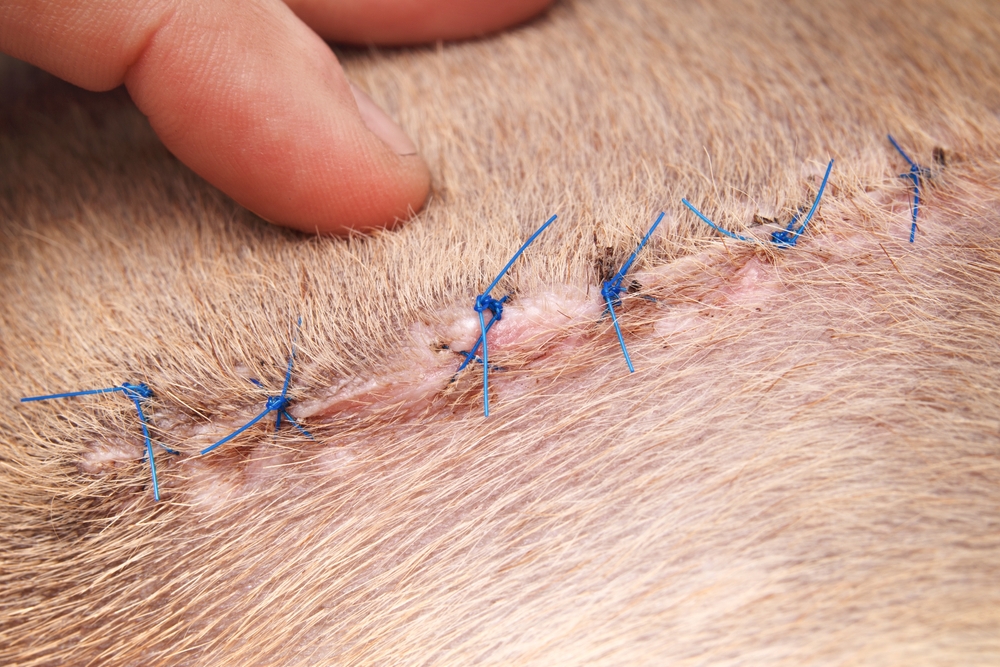
Your vet will go over all the things you need to do to help your dog recover from their surgery, as each case will be different, depending on the individual pet and the type of surgery they have had. Some dogs will go home with a dressing or bandage over the wound, while others will be left open. Depending on the location of the surgical wound, your dog may be required to wear a surgical suit or e-collar. It is important to leave this in place, particularly overnight or when you are out, as a dog can do a LOT of damage to a wound in a very short period when left unsupervised. If you are struggling to keep a collar or suit on your pet, talk to your vet about some alternatives. You might even want to fashion a custom collar at home!
Let’s talk about what a clean, surgical wound should look like at different stages of healing, and what you need to be on the lookout (BOLO) for.
Day 1-3: Inflammation
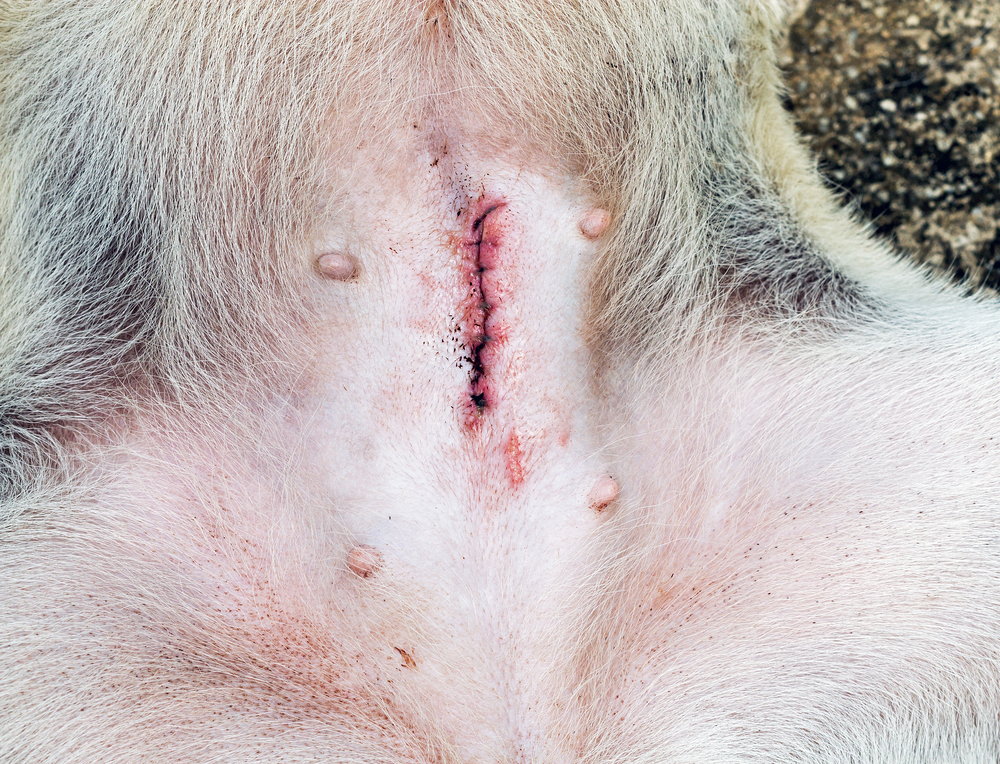
During the first few days, it is quite normal for the edges of the wound to look a bit pink and inflamed.
- Swelling – the sutures (stitches) shouldn’t be digging into the skin
- Pain – the wound may be tender, but shouldn’t be excessively painful
- Discharge – there may be a small amount of blood-tinged fluid from the wound, but there should not be much fresh blood or pus
Day 4-7: Proliferation

This is when your dog might find the wound itchy or irritating, as active healing begins, and shaved hair begins to grow back.
- Licking, scratching, chewing
- Wound or sutures pulling apart
- Large swellings along the incision line
Day 7 → : Remodeling
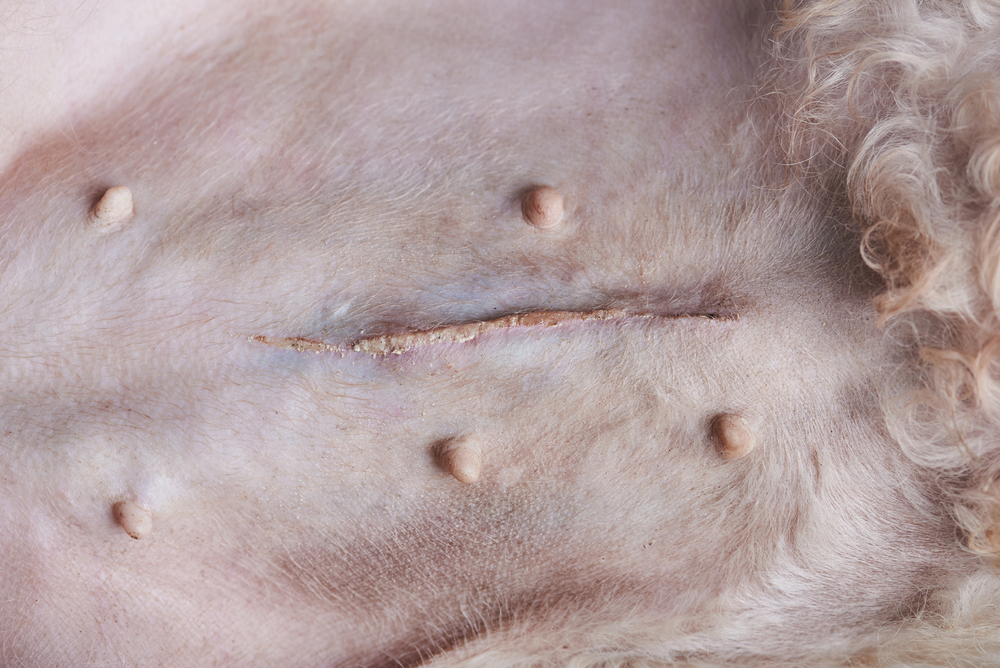
This is the stage where the sutures are no longer needed, although we usually leave them in for another 5-7 days to be safe. You should be able to put gentle pressure on the wound without any discomfort, and the incision should be knitted together.

Common Surgical Wound Complications
Wound Breakdown
Also known as wound dehiscence, this is the partial or total failure of wound closure. It can happen for many reasons, such as infection, failure of sutures, or too much running around. The treatment will depend on where the dehiscence has occurred, how large it is, and what stage of healing the wound is at.
Internal wound dehiscence will almost certainly require surgery, while a breakdown of the skin incision might be treated with a dressing, skin staple, or by completely re-closing the wound.
Seroma
A common complication of surgery, particularly on abdominal wounds or where a large mass or tumor has been removed. A seroma is a collection of inflammatory fluid that has rushed to the incision site to help heal the wound. In most cases, rest and anti-inflammatory medication will see the seroma resolve on its own, but they occasionally need to be drained.
Infection
Post-operative infections aren’t as common as you might expect, given that dogs are not necessarily the most fastidiously clean of creatures! But, they do happen and need to be treated quickly. If your dog’s wound is red, warm, or swollen, or if there is a pink, yellow, or creamy discharge, call your vet right away.
Suture Reactions
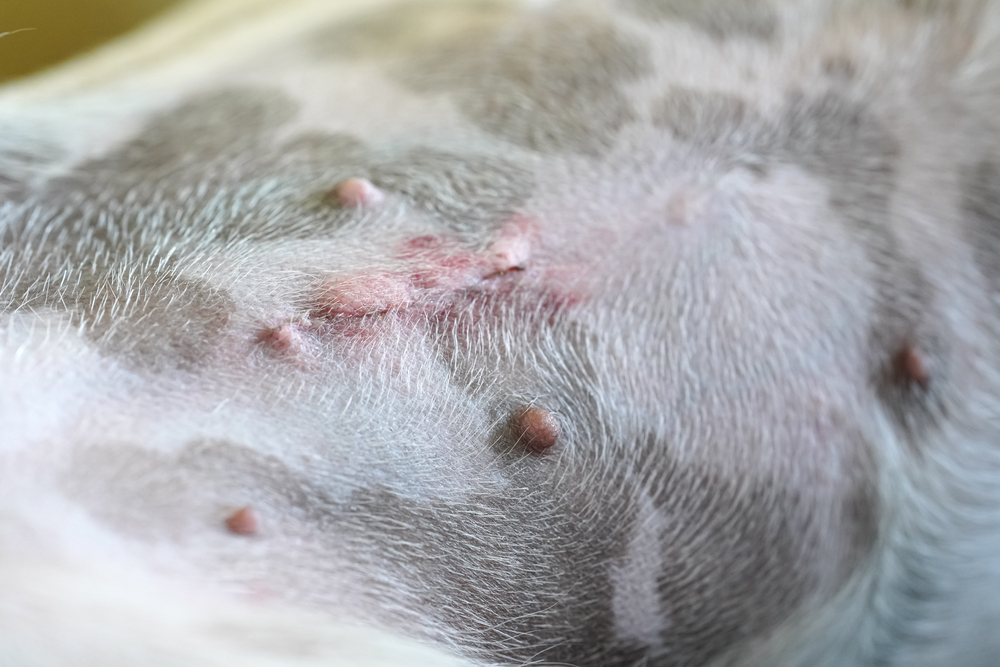
Suture material has come a long way since catgut was the mainstay of wound closure. Even so, some individuals will be more sensitive to suture material, which can result in inflammation around the incision and lumps/bumps forming along the suture line, which may be quite mild or severe. This often occurs during the proliferation stage of healing. Always check with your vet if you are worried about any swelling on your dog’s wound, but it is not uncommon for small, painless bumps to appear whilst the incision is healing.
Frequently Asked Questions
Should I Clean The Wound?
Unless specifically directed to by your vet, you shouldn’t need to clean your dog’s surgical incision. A small amount of crusted blood or scabbing is normal, and it is better to leave these in place rather than risk contaminating the wound or disrupting healing by trying to pick them off.
If your dog’s wound becomes dirty, the best thing to do is dip some cotton wool in sterile saline or cooled boiled water (no need for it to be salty), squeeze out excess water, and gently dab the skin around the wound. Avoid touching the incision itself.
Remember, your dog might be quite tender, so it’s a good idea to approach the wound slowly, using a couple of ‘warm up’ pieces of cotton wool to work your way closer to the wound, before using a fresh piece to clean around the incision.
How Often Do I Need To Go Back For A Check-up?
This will very much depend on the age and health of your dog, and the type of surgery they have had. For routine procedures like a spay or castration, most vets will recommend a post-op check after 3 and 7 days, with sutures being removed after 14, but every vet and practice is different.
Most importantly, if you are worried about your dog’s wound or any other aspect of your dog’s recovery, don’t wait for your next appointment; contact your vet right away. If your vet is unavailable, there are always online veterinary services that can assist you.

How Long Does It Take For Dissolvable Sutures To Dissolve?
Different suture material types are designed to last longer than others, depending on the job they are doing, and they are designed to have a minimum amount of time before they start to break down. For example, suture materials used in sewing up intestines will start to break down after a couple of weeks, as the tissue heals quickly, and we don’t want suture material to cause a problem. In the deepest muscular layer of the abdomen, the suture material used won’t start to break down for at least 4-6 weeks, while the material used in intradermal sutures breaks down after 2-3 weeks. However, how long some suture material lasts can vary, and it isn’t uncommon to still feel suture material in the deepest layer of a spay scar many months after the surgery!
Should I Cover The Wound With Ointment?
Never put any ointments, gels, or creams on a surgical incision unless specifically instructed to by your vet. Most skin preparations for humans are not suitable for dog skin and will do more harm than good.
Final Thoughts
Hopefully, you are feeling more prepared than ever to monitor your dog after surgery. Often, the most challenging part of a dog’s surgical recovery is trying to stop them from running around within a day or two! It is extremely important to use any collars or suits to prevent your dog from licking or scratching their wound, even if they’re not a fan of their new fashion accessory. It is far better to have a dog that resents their surgical collar than one that needs to have another surgery.
Your vet would always prefer to examine your dog or even look at a photo than have you worrying about your dog’s wound and not getting in touch, so don’t hesitate to call them if you’re at all worried.
Featured Image Credit: DyziO, Shutterstock




























4 Responses
Good knowledge.
Thanks, Manish! We're glad you found what you were looking for. 🙂
Thank you so much! lots of GREAT information. It has helped me to know that I'm doing the right thing.
Sincerely
Yvonne Roberts
You're welcome, Yvonne! We're happy to hear you found our article so helpful. 🙂