In this article
For dogs that need occasional anal gland expression, going to the veterinarian or groomer is often the method of choice. But if your dog suffers from persistent anal gland issues, you might be wondering if you can just express them at home.
Most dogs can have their anal glands expressed at home, but if you want to try this, be sure to get hands-on instructions from a vet first and seek their advice if you have any questions or concerns about the process.

What Are a Dog’s Anal Glands?
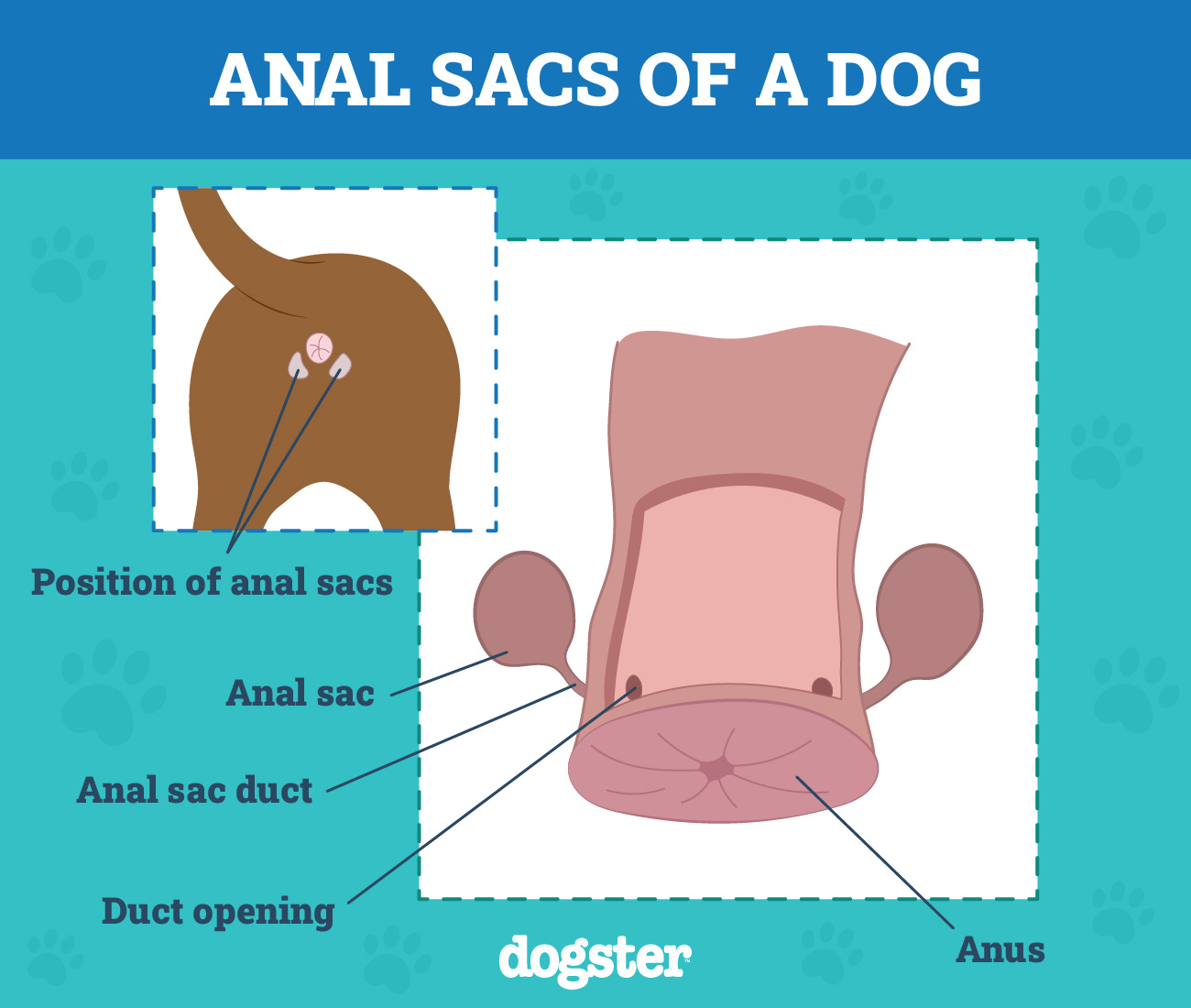
Anal glands, or anal sacs, are small pouches found just inside a dog’s rectum that secrete and store anal gland fluid, a pungent and slightly greasy liquid that gives the dog and their feces a specific odor. If you were to look at your dog’s anus as a clock, the anal glands would be located at the 4 and 8 o’clock positions. They vary in size from small peas in small dogs to grapes in large dogs.
Normally, a small amount of anal gland fluid is expressed with every bowel movement. This gives a dog’s feces a personal touch to let other dogs know who did what and where. Anal glands are also part of the reason that your dog sniffs other dogs’ rear ends. These little sacs carry a bunch of personal information in tiny yet smelly packages.
Occasionally, however, the anal glands won’t express on their own and can fill up like overinflated balloons. As you can imagine, this can become quite uncomfortable and even lead to an infection.
Can You Express Your Dog’s Glands Yourself?
Many owners become queasy the first time that they see an anal gland expression done in dogs, but after seeing it a fourth or fifth time, they may start to think that they could do it themselves at home. In truth, that may be the case!
If this is something that you’re interested in, make sure you’re not going at it blindly, so to speak—that is, without any veterinary guidance. You want a bit of coaching because you can actually do damage and cause your dog to be in pain if you’re not completely sure what you’re doing. You may also miss signs of more serious issues if you don’t know what to look for.
When you think that you’re ready to express your dog’s anal glands at home, start by having a veterinarian show you how. Most vets will also let you practice at the clinic with their guidance so you’ll know exactly what to do when you’re doing this task alone.
There are two ways of expressing a dog’s anal glands: internally and externally. Whichever method you apply to your dog will be up to you and a vet.
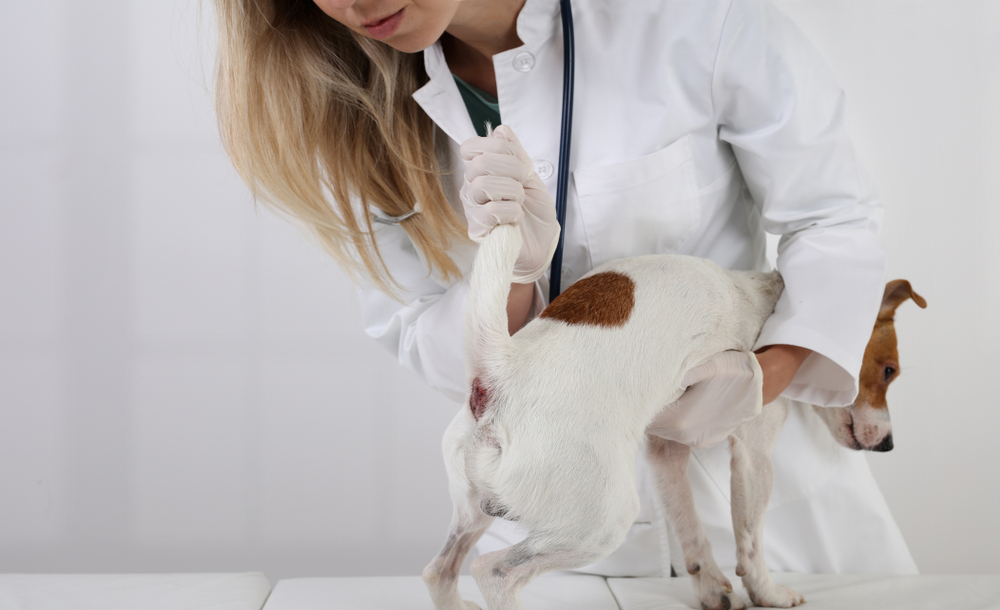
Internally
Have someone restrain your dog, preferably on a table or counter at a comfortable height for you. Wearing a glove on your dominant hand, apply a small amount of lube to your index finger. Gather a paper towel in the same hand. Insert your index finger into your dog’s rectum. You should feel the anal glands at the 4 and 8 o’clock positions. They should feel like firm little peas. Apply gentle pressure with your finger on the end of the gland nearest your dog’s head, and slowly roll your fingertip toward the rear end. Fluid should escape the glands through the anus and into your waiting paper towel. Repeat on both sides.
Externally
Have someone restrain your dog in a comfortable position, and don a glove on the appropriate hand. Gather a paper towel into your other hand, and locate the anal glands externally with your thumb and index finger. They should be at the 4 and 8 o’clock positions. Gently pinch your fingers, squeezing the anal glands together and releasing the fluid out through the anus and onto your paper towel.
What If You Can’t Get Your Dog’s Anal Glands to Express?
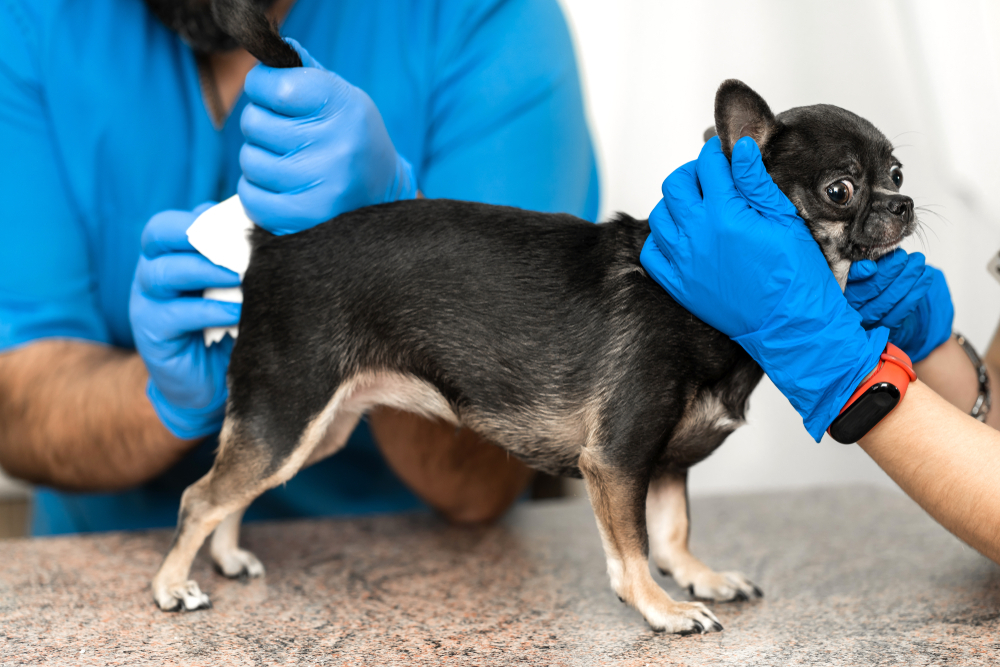
Expressing anal glands does take a bit of practice and may not be something that you get right the first time. Or your pup may have a more serious issue that’s causing the blockage and needs a veterinarian’s attention. Either way, be sure to check in with a vet to make sure you’re on the right track or to check that everything is as it should be, anal gland-wise.
Normal anal gland fluid should be greasy and brown and smell sort of fishy. If you get a fluid that’s yellow or whitish or excessively foul smelling or your dog is overtly in pain, check in with a vet before proceeding.
How Do You Know If Your Dog Needs Their Glands Expressed?
Most dogs will express their anal glands naturally with every bowel movement, but some aren’t so lucky. When the anal glands become impacted or infected, they will need to be expressed manually. Typically, applying gentle pressure on the outside or inside of the dog’s rectum is enough to remove the blockage and enable the anal glands to flow freely once more. So, how do you know when your dog needs your assistance?
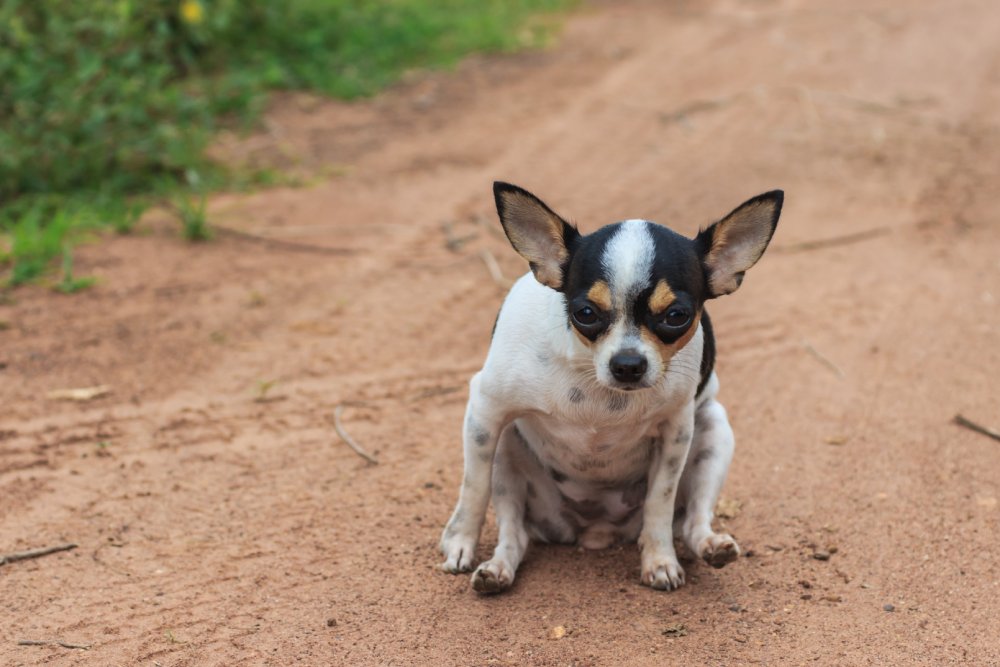
- Scooting (dragging their hind end on the ground)
- Straining to defecate
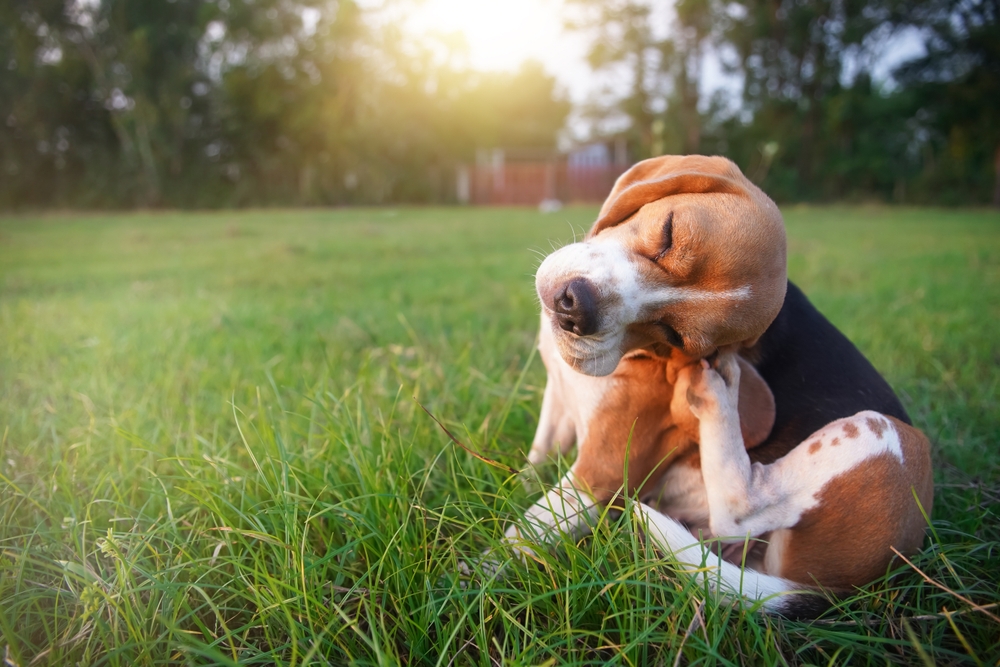
- Frequent licking of the anus and the surrounding area
- Discomfort or unwillingness to sit
- Foul-smelling drainage
- Crying or whining when trying to poop or sit
- Lethargy or withdrawal
- Swelling or redness around the anus
If you notice any of these signs, it’s likely time to do the stinky deed of expressing your dog’s anal glands.
How Often Do You Need to Express Your Dog’s Anal Glands?
This depends on your dog’s physiology. Some dogs never need any help from humans, while others, especially small breeds, may need consistent attention. Watch your dog for signs that they’re in need of a good squeezing and get it done as necessary. However, if your dog isn’t adept at showing signs of needing an expression or you want to get it done before they experience any discomfort, you can consider getting them on a regular schedule, such as expressing them every other week.
What Foods Help Dogs Express Their Anal Glands?
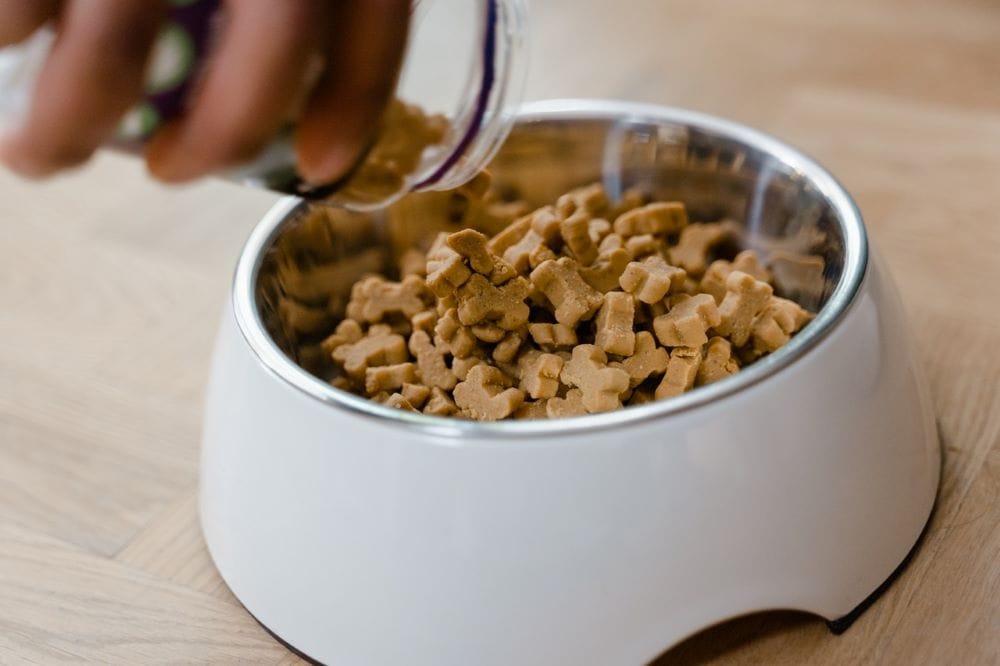
If frequent manual expression of your dog’s anal glands isn’t your cup of tea, adding a bit of fiber (found in canned pumpkin, for example) to their diet may be able to help. It can bulk up a dog’s bowel movement to help naturally put more pressure on the anal glands when they poop. However, always talk to a vet before adding any high-fiber foods or fiber supplements to your dog’s diet.
If you need to speak with a vet but can't get to one, head over to PangoVet. It's our online service where you can talk to a vet online and get the personalized advice you need for your pet — all at an affordable price!

Conclusion
Anal glands are a normal part of your dog’s digestive anatomy, and they do serve a purpose. If a vet has become all too familiar with your dog’s anal glands, though, you may be considering expressing them at home. If this is something that you wish to bravely undertake, be sure to do so with the guidance of a veterinarian. Also, always have someone help restrain your dog for you, and bring any issues to a vet’s attention.
Featured Image Credit: Yekatseryna Netuk, Shutterstock