12 Interesting Facts About Bernese Mountain Dogs (Vet-Reviewed)


In this article
The Bernese Mountain Dog, also known as “Berners,” hails from Switzerland, where they were valuable assets to farmers due to their extraordinary capabilities as herding dogs and protecting livestock. These calm, affectionate, and good-natured dogs proved worthy of both a working dog and a family companion, and they are still a popular breed to own to this day.
Given their exceptional characteristics and traits, we decided to put together 12 facts about the breed worth knowing. Read on to learn more about these amazing dogs, as some facts may surprise you.

The 12 Facts About Bernese Mountain Dogs
1. They Are Cold-Weather Dogs
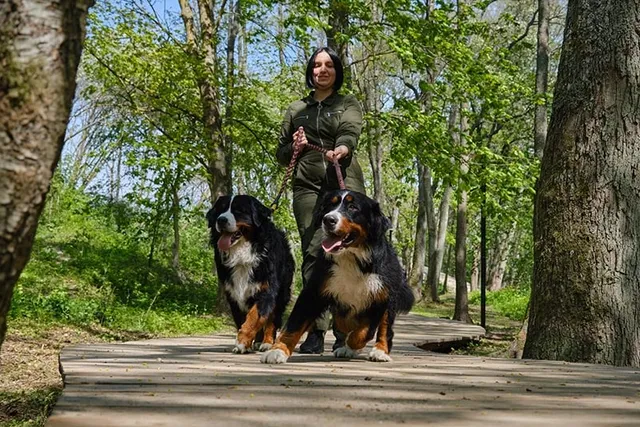
If you live in a cold climate, the Bernese Mountain Dog is perfect for you. These dogs were bred to work in the snowy mountains and thrive on cold-weather activities. They will gladly join you on a hike, backpacking, camping, and any other cold-weather outdoor activity.
If snow is on the ground, they’ll enjoy a good romp in the white stuff. Of course, once the fun is done, the Bernese Mountain Dog will be happy hanging out with the family indoors. With this in mind, they do better living in colder climates rather than warm ones.

2. They Have Short Life Expectancies
Unfortunately, the Bernese Mountain Dog has a relatively low average life expectancy, even when compared to dog breeds of a similar size. The American Kennel Club lists a life expectancy of 7-10 years, while recent studies have calculated the mean life expectancy of Bernese Mountain Dogs to be approximately 7 years, compared to an average of 10 years across all dogs. Larger breeds generally have a lower life expectancy than smaller dogs, but this was low even when compared with dogs of a similar size, such as German Shepherd dogs, whose mean life expectancy was 10.3 years.
Cancer was found to be the leading cause of death, followed by degenerative joint disease and spinal issues. As they are prone to hip and elbow dysplasia, arthritis, and other debilitating conditions that can lead to a poor quality of life that may end with euthanasia, it’s vital to keep them at an ideal weight to help with these potential health issues.
3. The Coat Is Always Tricolored
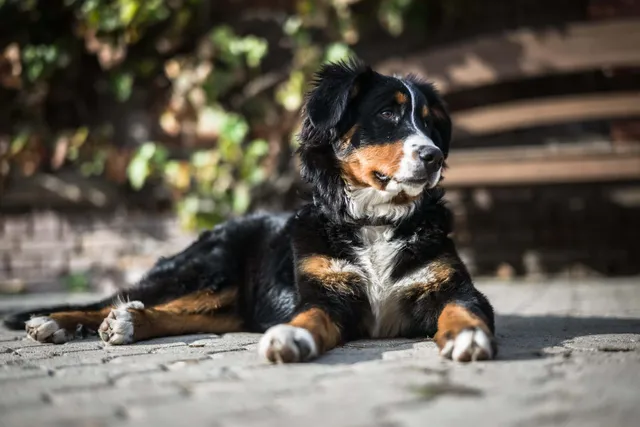
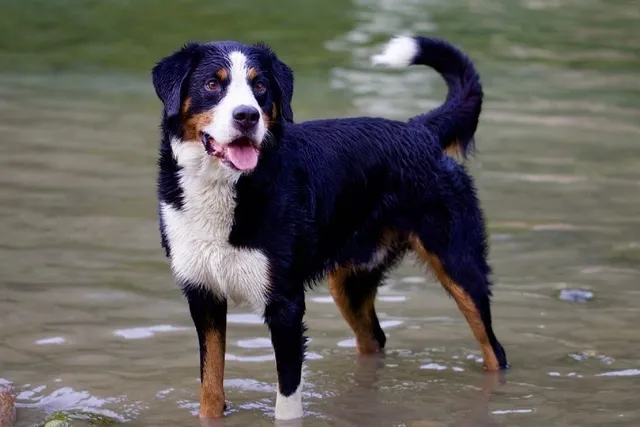
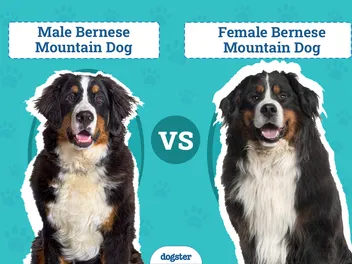
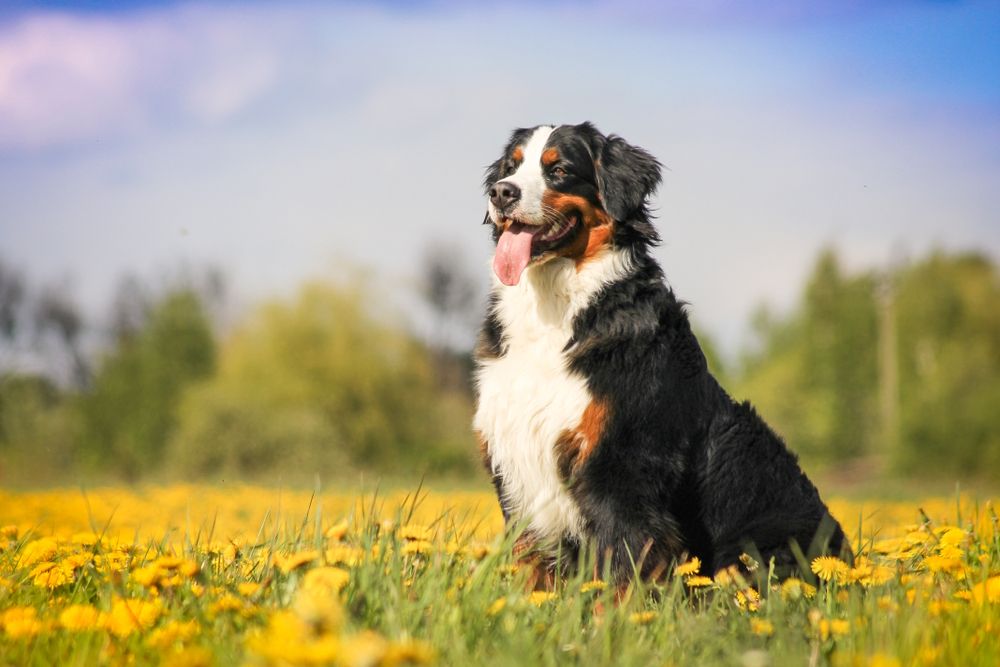
If you’ve ever seen a Berner, you know that the coat is thick and tricolored with white, black, and brown colors, with black being the predominant color on the body. They tend to have white chests with white on the face, and brown can be seen around the legs and above the eyes, nose, and mouth. The thickness of the tricolored coat also enables them to withstand harsh, cold climates, much like the climate in their native Switzerland.

4. They Excel in Drafting and Carting
As part of the American Kennel Club (AKC) working group, these dogs excel in dog sports, with one being drafting and carting. These dogs are large and fully equipped for the task, which comes in handy on farms for transporting multiple items simultaneously. They also hold their own in herding, obedience, and agility courses.
5. They Were Used as “Cheese Dogs”
In the 1850s, the Bernese Mountain Dog was used to pull carts of cheese and milk to customers. In fact, they could pull carts weighing up to a whopping 1,000 pounds or 10 times their body weight. Even though these dogs are no longer used for this purpose, the Bernese Mountain Dog Club of America holds cart-pulling competitions each year to allow these versatile working dogs the chance to show off their skills and strength.
6. They Are Slow to Mature
Berners do not reach full-grown maturity until 2 to 3 years of age, meaning these affectionate dogs tend to stay in the goofy puppy stage longer than other dog breeds. They are also slow to mature mentally, meaning it takes time to train them as working dogs and understand the tasks that are expected of them. There is an old Swiss saying relating to their long puppyhood: “Three years a puppy, three years a good dog, three years an old dog, and the rest is a gift.”

7. They Are Calm and Affectionate Family Dogs
Berners are good-natured, affectionate, and calm dogs who are eager to please their humans and desire to be part of the family. They do well with children and other pets and make wonderful family companions if well-socialized and trained.
If you desire to cuddle up with a large, fluffy, tricolored dog, the Bernese Mountain Dog is a perfect match, as they love to cuddle with their humans.
8. These Dogs Can Have Large Litters
A healthy female Berner can give birth to up to 15 puppies at a time, although the average litter size is around 7 puppies.
Many factors play a role in the number of puppies per litter. It’s likely that younger, healthy females will have more puppies. The number of previous litters a female has had can also influence the litter size, with first time mothers tending to have smaller litters. And it’s not just the females who play a role in the litter amount—unhealthy or older males will produce fewer pups than younger, healthy males.
9. The Bernese Mountain Dog Breed Is a Hero
Undoubtedly, dogs have played vital roles in search and rescue missions, and the Bernese Mountain Dog is one of them, even if not trained for the task. For instance, a female Berner named Bella rescued her owner from a house fire in Canada in 2013. A male named Nico rescued two people being pulled out to sea by rip currents in California in 2015. In 2017, a Berner named Izzy survived a deadly inferno from wildfires in the same state. Needless to say, these dogs are pretty incredible and are capable of extraordinary feats.

10. Shedding Is Plentiful
A not-so-pleasant fact about the Bernese Mountain Dog is that they shed a lot and the shedding is year-round. This breed has thick, long, and wavy or straight double coats that protect them from the extremely cold climate in their native Swiss Alps, and they shed even more during shedding season in the spring and fall.
Berner owners know vacuuming is likely a daily chore while living with the breed, along with brushing that thick, double coat at least twice a week, if not more.
11. They Are a “Dry Mouth” Breed
What the heck is a “dry mouth” breed? This term simply means that the breed typically doesn’t drool; however, this isn’t entirely true with all Berners. A Berner who doesn’t drool will have tight, fitting lips, whereas a Berner who does drool will have loose or hanging lips.
12. The St. Bernard Almost Wiped Them Out
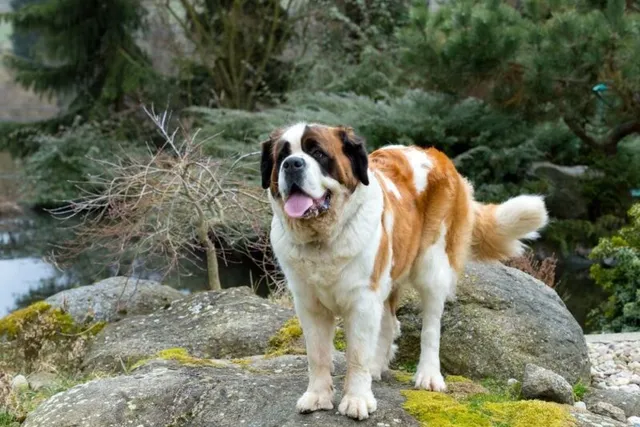
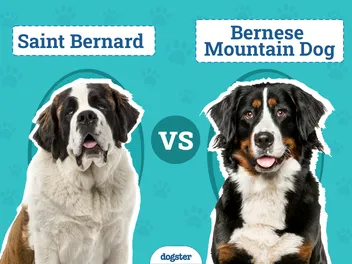
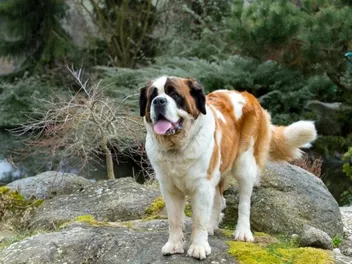
The St. Bernard is similar in terms of character and traits, and they almost caused the Bernese Mountain Dog to become extinct. In Switzerland in the 1800s, the St. Bernard grew in popularity, and farmers were obtaining dogs for more companion animals rather than working dogs due to the Industrial Revolution; there simply was not a large demand for working dogs at the time.
Thankfully, a Swiss man named Frank Schertenleib took the time to breed these amazing dogs and kept the breed alive.

Conclusion
As you can see, the Bernese Mountain Dog is a pretty incredible breed. With a rich history as working dogs with strong work ethics, they also make wonderful family pets who thrive under human companionship. They do well with children and other pets and have extraordinary patience and a calm demeanor, making them an all-around fabulous dog breed to own. If you’re contemplating adding one to your family, we hope these facts help you understand the breed even more. See also:
Sources
https://www.akc.org/expert-advice/lifestyle/7-fun-facts-bernese-mountain-dog/
https://vcahospitals.com/know-your-pet/dog-breeds/bernese-mountain-dog
https://www.akc.org/canine-partners/more-sports-for-all-dogs-drafting-carting-2/
https://www.webmd.com/pets/dogs/what-to-know-about-bernese-mountain-dogs
https://www.sciencedirect.com/science/article/abs/pii/S0034528806001226
https://actavetscand.biomedcentral.com/articles/10.1186/s13028-022-00646-x
http://www.thekennelclub.org.uk/download/1515/hsbernesemountaindog.pdf
Featured Image Credit: Eve Photography, Shutterstock
Expert dog care, straight to your inbox
News, insights, expert advice, and everything dog.
No spam — unsubscribe anytime.
By signing up, you agree to our Terms & Conditions and Privacy & Cookies Policy.
How useful was this post?
Click a star to rate. You can leave written feedback afterwards. (We read all feedback.)
Rachel Giordano is a writer and musician living in Pensacola, Florida, with her partner and their two dogs, Aero, a Border Collie/Sheltie mix and Sophie, a Boston Terrier. Rachel holds a Bachelor of Arts degree in communication and loves writing about animals of all types. When she’s not writing about pets, she loves to write suspense/thriller novels. A musician by night and writer by day, she enjoys educating the public about the needs and requirements of animals, big and small.